

In the world of creating stunning and effective online presences, two terms are often used interchangeably, leading to widespread confusion: website design and website development. While intimately related and interdependent, they represent distinct disciplines, each requiring a unique skill set and focus. Many businesses, when approaching a new website project or an overhaul, struggle with understanding web design vs web development, unsure what expertise they truly need.
This misunderstanding can lead to misaligned expectations, budget overruns, and ultimately, a less effective website. The core difference between web design and web development lies in their primary objectives and the stages of a project they encompass. One focuses on the look and feel—the visual aesthetics and user interface—while the other deals with the mechanics and functionality that bring it to life. Getting clarity on this fundamental Design vs development distinction is crucial for anyone looking to build a robust and engaging online platform.
At Bornneo.Lab, we frequently help clients navigate this landscape, explaining that while a beautiful web design can attract visitors, it's solid web development that ensures they stay, interact, and convert. It’s not about choosing one over the other, but understanding their symbiotic relationship in crafting a truly impactful digital asset. Let’s explain web design vs web development in detail.
READ ALSO: Preparing Your Website for Busy Periods and Holiday Sales
Defining Web Design: The Art of Visual and User Experience
Web design is essentially the creative process of crafting the aesthetic appeal and overall website user experience of an online platform. It's what the user sees and interacts with directly. Think of it as the architecture and interior design of a building – how it looks, feels, and how easily one can navigate through its spaces. A skilled web designer focuses on elements such as layout, color schemes, typography, imagery, and the overall flow of information, all while ensuring a strong user interface (UI) and user experience (UX).
The primary goal of web design is to create an intuitive, engaging, and aesthetically pleasing site that effectively communicates a brand's message and guides users through its content. This involves a deep understanding of human-computer interaction, psychology, and artistic principles. Designers are the architects of the user journey, ensuring every click, scroll, and interaction feels natural and purposeful. They determine the website structure and how interactive elements will appear and behave before any coding begins.
Key aspects of web design include:
- UI/UX Design: This is paramount. UI/UX design ensures the site is both beautiful (UI - User Interface) and easy to use (UX - User Experience). A good UX minimizes frustration and maximizes efficiency for the user.
- Visual Aesthetics: This covers everything from branding consistency to the judicious use of white space, ensuring a clean and inviting look. The goal is to make the website visually appealing and aligned with the brand identity.
- Information Architecture: Organizing content logically so users can easily find what they're looking for. This affects the overall website structure.
- Wireframing and Prototyping: Creating skeletal frameworks and interactive mock-ups to visualize the layout and flow before actual development begins. This iterative process allows for feedback and refinement early on.
- Graphic Design: Producing custom graphics, icons, and other visual assets that contribute to the unique identity of the website.
- Responsiveness: Designing layouts that adapt seamlessly to different screen sizes, from desktops to mobile phones, which is critical for today's diverse internet access points. For more on this, check out our insights on What is 'User Experience' and Why Should Your Business Care?
The creative process of web design sets the stage for the entire project, directly influencing how website design impacts development by providing a clear blueprint.
Understanding Web Development: Bringing Designs to Life with Code
Once the design blueprint is complete, it's the role of web development to take those static designs and transform them into a fully functional, dynamic website. This is where the technical implementation happens. Web development involves writing the coding that makes the website work, handling everything from databases to server interactions. If web design is the creative vision, then web development is the engineering expertise that builds the reality.
Developers are problem-solvers who use various web technologies and programming languages to ensure that all the interactive elements function correctly, that data is stored and retrieved efficiently, and that the website performs optimally. This discipline is broadly categorized into two main areas: front-end development and back-end development.
Front-End Development: The Client-Side Implementation
Front-end development is responsible for everything a user sees and interacts with in their browser. This involves translating the UI/UX design into functional web pages. Developers in this domain use languages like HTML (for structure), CSS (for styling and visual aesthetics), and JavaScript (for functionality and interactivity). They ensure that the website is responsive, fast, and provides a smooth website user experience.
Key responsibilities of a front-end developer include:
- Implementing the layout and visual elements specified by the web design.
- Creating interactive elements such as buttons, menus, forms, and animations.
- Ensuring cross-browser compatibility and responsiveness across devices.
- Optimizing for performance and loading speed. This is crucial for retaining visitors, as slow websites can deter users. You can read more about enhancing website performance, especially with visual content, in our article on How to Use Video on Your Website Without Slowing It Down.
Back-End Development: The Server-Side Brains
Back-end development deals with the server-side logic, databases, and application programming interfaces (APIs) that power the website from behind the scenes. This is the part of the website users don't see, but it's essential for its core functionality. It involves managing data, user authentication, and ensuring that everything works securely and efficiently.
Common programming languages for back-end include Python, PHP, Ruby, Java, and Node.js. They interact with databases like MySQL, PostgreSQL, or MongoDB to store and retrieve information, which is critical for dynamic content, user accounts, and e-commerce functionalities. For businesses reliant on user input, understanding the back-end's role in processing information from website forms is vital.
Key responsibilities of a back-end developer include:
- Developing and maintaining the server, application, and database.
- Writing APIs to enable communication between different parts of the website.
- Implementing security measures and data protection.
- Handling user authentication, payment processing, and other complex server-side logic.
- Integrating content management system (CMS) platforms like WordPress or Drupal, allowing non-technical users to manage website content easily.
The entire website development process explained from both front-end and back-end perspectives clarifies the robust technical foundation needed.
The Symbiotic Relationship: When Design Meets Development
The key differences website design and development become clear when you see how they interact. A beautiful web design without solid web development is just a picture; it lacks interactivity, dynamic content, and functionality. Conversely, robust web development without thoughtful web design might be perfectly functional but could be difficult to use or visually unappealing, leading to a poor website user experience.
In practice, Design vs development is not a linear handover but an iterative, collaborative process. Designers might create initial wireframes, which developers review for technical feasibility. As designs are refined, developers begin building the front-end development, then integrate with the back-end development. This continuous feedback loop ensures that the aesthetic vision can be technically implemented and that the technical infrastructure supports the desired functionality and interactive elements.
This collaboration is essential for addressing long tail concerns like "how website design impacts development". A designer needs to understand the limitations and possibilities of web technologies, while a developer benefits from grasping the user's perspective and the goals of the visual aesthetics. Both contribute significantly to the ultimate success of the website.
Roles and Tools: Distinguishing the Professionals
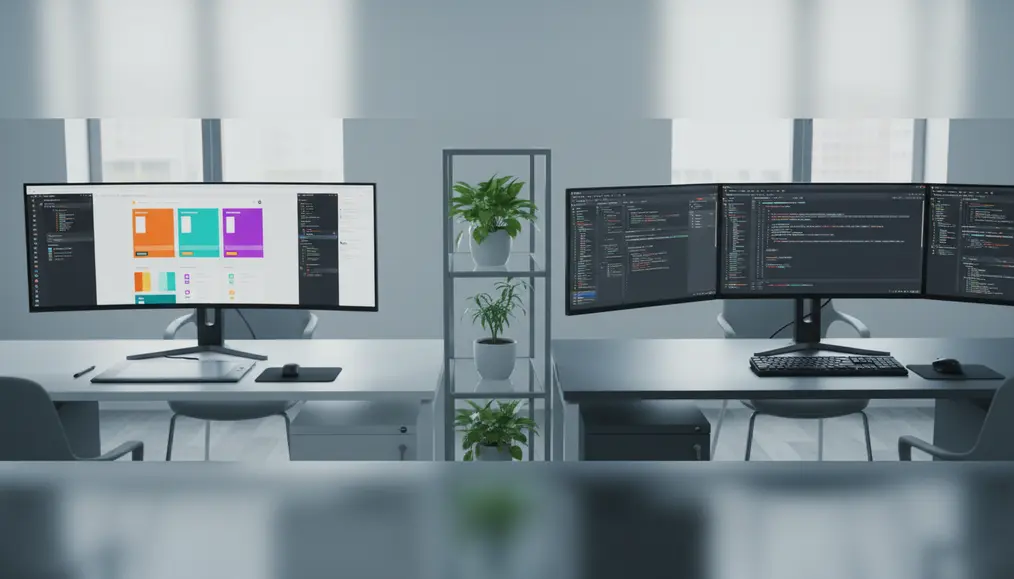
To further compare web design vs web development, let's look at the typical roles and tools involved:
Web Designer's Focus
- Role: Focuses on the "look and feel," UI/UX design, and overall user flow. They are the visual strategists.
- Key Skills: Creativity, graphic design, understanding of user psychology, attention to detail, proficiency in design principles.
- Tools: Adobe Photoshop, Illustrator, Figma, Sketch, Adobe XD. These tools facilitate the creative process of shaping visual aesthetics and the user interface.
Web Developer's Focus
- Role: Focuses on the "how it works," coding, databases, and servers. They are the technical engineers.
- Key Skills: Programming languages (HTML, CSS, JavaScript, Python, PHP, SQL), problem-solving, logical thinking, understanding of web technologies and algorithms.
- Tools: Text editors (VS Code, Sublime Text), integrated development environments (IDEs), version control systems (Git), browser developer tools, frameworks (React, Angular, Vue.js, Laravel, Django). These tools are vital for technical implementation and building the website structure.
Understanding the distinct "roles of web designer vs web developer" is vital when building a team or choosing between web design and web development services. Bornneo.Lab helps businesses navigate these choices, ensuring the right expertise is applied at every stage.
When to Choose Which Service or a Combined Approach
When you're embarking on a digital project, knowing whether you need web design, web development, or both is crucial. If your existing website looks outdated, is difficult to navigate, or doesn't represent your brand effectively, you likely need a strong focus on web design and UI/UX design. This will enhance your visual aesthetics and improve the website user experience.
Conversely, if your website is slow, has broken forms, lacks specific features (like an e-commerce store or a customer portal), or needs a robust content management system (CMS), then extensive web development is required. This focuses on its core functionality and technical implementation.
For most new website builds or significant overhauls, a combined approach is indispensable. This is where the true power of Design vs development collaboration shines. An experienced agency like Bornneo.Lab offers both disciplines under one roof, ensuring seamless integration from concept to launch. We understand the key differences website design and development and leverage this understanding to deliver cohesive, high-performing websites. This integrated approach is often the answer for those contemplating their "career path web design vs web development" and seeing the value in both.
The Impact of Effective Design and Development on Business Goals
The synergy between website design and website development directly impacts a business's online success. A well-designed website with intuitive UI/UX design and appealing visual aesthetics draws visitors in and builds trust. An effectively developed website with robust functionality, fast loading times, and secure server-side logic ensures visitors can accomplish their goals, whether it's making a purchase, filling out a form, or finding information. This combined strength leads to higher conversion rates, improved search engine rankings, and stronger brand perception.
For example, imagine a beautifully designed e-commerce site where the payment gateway constantly crashes – a clear development failure. Or a technically perfect site that's visually chaotic and impossible to navigate – a design failure. In both scenarios, the user leaves, and the business loses a potential customer. This illustrates why the "how website design impacts development" is so critical, and why a holistic approach to web development vs web design is essential.
Choosing a partner who excels in both areas means investing in a comprehensive solution that considers every aspect of your online presence, from initial concept to ongoing maintenance. It’s about building a digital asset that not only looks good but also performs flawlessly, delivering measurable results for your business. For businesses aiming for local relevance, even considerations like using a .com.au domain name are part of a broader development strategy to support a specific market.
Why choose Bornneo.Lab for Design vs development?
- 🌟 Client-focused delivery with clear scope, timelines, and measurable outcomes aligned to your business goals.
- 🧩 End-to-end support from discovery and strategy to implementation, documentation, and handover.
- 📌 Practical solutions built to fit your existing stack and team workflow—no unnecessary complexity.
Conversion-Driven Design
We design digital experiences with a clear purpose. Every layout, interaction, and call-to-action is strategically crafted to guide users toward meaningful conversions—whether that means leads, sign-ups, or business inquiries.
Mobile-First & Responsive
With the majority of users accessing websites from mobile devices, we prioritize responsiveness from day one. Our solutions adapt seamlessly across screen sizes while maintaining performance and usability.
SEO & Performance Optimized
We build with technical SEO, site speed, and performance best practices in mind—helping your website earn visibility, trust, and sustainable organic growth.
Bornneo.Lab Client Testimonials
★★★★★ – David L.: Bornneo.Lab truly understands the difference between web design and web development. They transformed our outdated site into a modern, highly functional platform. The website user experience is now outstanding.
★★★★★ – Sarah K.: Our new site's visual aesthetics are stunning, and the backend functionality is flawless. Bornneo.Lab handled both the web design and web development with exceptional skill. They explained the Design vs development process clearly.
★★★★★ – Mark T.: We needed an agency that could deliver both creative flair and technical precision. Bornneo.Lab’s integrated approach to UI/UX design and front-end development exceeded our expectations. They really helped us with understanding web design vs web development.
★★★★★ – Emily R.: The team at Bornneo.Lab made sure our new website was not just beautiful but also incredibly robust. Their expertise in both web design and back-end development ensured a seamless project from start to finish.
★★★★★ – John P.: From the initial concept sketches to the final coding, Bornneo.Lab demonstrated a deep understanding of what it takes to build a successful online presence. Their mastery of web development vs web design is evident in the results.
READ ALSO: Avoiding the 'DIY Trap': When to Stop Building and Start Hiring
Frequently Asked Questions About Website Design and Development
Q: What is the primary difference between web design and web development?
A: The primary difference between web design and web development is that web design focuses on the visual aspects and website user experience (how a website looks and feels), while web development focuses on the technical implementation and functionality (how a website works and performs) through coding and web technologies. One is about appearance and user interaction, the other is about underlying structure and operation.
Q: Can a single person be both a web designer and a web developer?
A: Yes, individuals can possess skills in both areas and are often referred to as "full-stack developers" or "web generalists." However, in larger or more complex projects, specialized roles often lead to more refined and high-quality outcomes. While a single person might handle the creative process and some technical implementation, deep expertise in both is challenging to maintain, particularly with evolving web technologies.
Q: Why is UI/UX design important for website development?
A: UI/UX design is critically important because it defines the website user experience and directly influences how users interact with the site. Good UI/UX design (a key part of web design) ensures the site is intuitive, engaging, and easy to navigate. Without it, even the most robustly developed site with advanced functionality can lead to user frustration and abandonment. It dictates how website design impacts development from the user's perspective.
Q: What technologies are typically used in front-end development versus back-end development?
A: Front-end development primarily uses HTML, CSS, and JavaScript, often with frameworks like React, Angular, or Vue.js, to create the client-side interactive elements and present the visual aesthetics. Back-end development involves languages like Python, PHP, Ruby, Java, or Node.js, often with frameworks like Django or Laravel, along with databases like MySQL or PostgreSQL, to handle server-side logic, data storage, and application functionality.
Q: How does a Content Management System (CMS) fit into Design vs development?
A: A content management system (CMS) like WordPress is built through web development (specifically back-end development provides its core functionality), allowing non-technical users to manage website content. Web design then applies themes and customizations on top of the CMS to control its visual aesthetics and UI/UX design. So, a CMS is a developed tool that designers then customize to fit the brand's look and feel, illustrating the close relationship in Design vs development.
Conclusion: The Cohesive Power of Design and Development
The distinction between website design and website development is fundamental to understanding the complexities of building a successful online presence. While web design lays the groundwork for visual aesthetics, UI/UX design, and overall user interaction, web development provides the essential coding, functionality, and technical implementation that bring that vision to life. Neither can truly thrive in isolation; their combined strength creates a powerful, engaging, and high-performing website.
At Bornneo.Lab, we offer a holistic approach, blending expert web design with robust web development to deliver solutions that are not only visually captivating but also technically sound and highly functional. We guide our clients through the nuances of Design vs development, ensuring their project benefits from meticulous planning and execution in both domains. When you need to elevate your digital presence, choosing a partner who understands and seamlessly integrates both aspects is the smartest investment. From the initial creative process to the final server-side logic, we ensure every detail contributes to your success. Learn more about the underlying structure of a great website from authoritative sources like W3C (World Wide Web Consortium) for web standards, MDN Web Docs (Mozilla Developer Network) for web technologies, and Google Developers (Google Developers) for best practices in web performance and SEO.
Contact Us
Ready to move forward with clarity and confidence? Get direct insights and tailored recommendations by speaking with our team.
Disclaimer: The information provided in this article is for general informational purposes only and does not constitute professional advice. Bornneo.Lab is not responsible for any actions taken based on the information provided.