

In today's fast-paced digital presence, your website isn't just an online brochure; it's often the first, and sometimes the only, impression a potential customer has of your business. Think about it: how many times have you landed on a website, struggled to find what you're looking for, or found it painfully slow, only to hit the back button out of frustration? This common scenario highlights a critical aspect of online success that many businesses overlook: the website user experience.
Simply put, user experience (UX) encompasses every interaction a user has with your website. From the moment they click a link to the ease with which they complete a purchase or fill out a form, every single touchpoint contributes to their overall feeling about your brand. A seamless, intuitive, and enjoyable UX can turn a casual visitor into a loyal customer, while a poor one can drive them away before you even have a chance to make your pitch.
So, the question isn't just what is 'User Experience', but more importantly, why UX matters for business and why should your business care? In an increasingly competitive online landscape, delivering exceptional website user experience is no longer a luxury—it's a necessity. It directly impacts your bottom line, brand reputation, and long-term online success. Let's understand UX better and explore its profound importance of UX for your enterprise.
READ ALSO: Why Professional Photos of Your Team Build More Online Trust
What Exactly is User Experience?

At its core, user experience (UX) is about how a person feels when interacting with a system, which in our context, is primarily your website. It's a broad term that extends far beyond just pretty visuals or a clean layout. While visual design (User Interface or UI) is a component of UX, it's only one piece of a much larger puzzle. Good UX considers utility, website usability, accessibility, and desirability, ensuring that the user's interaction is efficient, effective, and ultimately, satisfying.
Beyond the Interface: The Holistic View of UX
To truly learn about UX, we must look at it holistically. It encompasses every aspect of the end-user's interaction with the company, its services, and its products. For a website, this includes the ease of navigation, the relevance and clarity of content, how quickly pages load, the site's responsiveness on different devices, and even the emotional response it evokes. A positive user experience anticipates user needs, solves their problems, and creates a delightful interaction. It’s about building a strong connection that fosters trust and encourages repeat visits.
The Core UX Design Principles

Effective UX design principles guide the creation of intuitive and impactful digital products. These principles ensure that the user remains at the center of the design process. Key among them are:
- User-Centricity: Always designing with the user's needs, behaviors, and motivations in mind.
- Consistency: Maintaining a uniform look, feel, and functionality across the entire website for predictability and ease of learning.
- Clarity: Ensuring that all elements, from navigation labels to content, are easy to understand and unambiguous.
- Accessibility: Designing for everyone, including users with disabilities, by adhering to accessibility standards.
- Feedback: Providing clear and immediate responses to user actions, such as confirmation messages or error alerts.
- Efficiency: Helping users accomplish their goals quickly and with minimal effort.
Adhering to these UX design principles is fundamental for creating a website user experience that truly delivers value and resonates with your target audience.
Why UX Matters for Business: Driving Your Digital Success

Understanding the fundamental benefits of good UX is crucial for any business operating in the digital age. Investing in website user experience is not merely about aesthetics; it's a strategic move that yields tangible returns. Good design isn't just about making things look good; it's about making them work well and efficiently for your users, leading directly to your business goals. Let's delve into the direct UX benefits.
Boosting Conversion Rates and ROI
One of the most compelling reasons to focus on website user experience is its direct impact on your conversion rates. When users find your website easy to navigate, understand the content, and trust the process, they are far more likely to complete desired actions—whether that's making a purchase, signing up for a newsletter, or requesting a quote. A streamlined customer journey means fewer roadblocks and more completed goals. Studies consistently show that every dollar invested in UX can yield a significant return on investment, making it a critical factor for achieving better conversions and a healthier bottom line. For instance, simplifying a checkout process by removing unnecessary steps can dramatically improve website UX and thus increase sales.
Enhancing Website Engagement and Reducing Bounce Rate
A well-designed website user experience keeps visitors on your site longer, exploring more pages and absorbing more of your content. This increased website engagement signals to search engines that your site is valuable and relevant, potentially boosting your search rankings. Conversely, a poor UX leads to a high bounce rate, where users leave your site almost immediately after landing. A high bounce rate can negatively impact your SEO and means lost opportunities. By providing intuitive navigation, relevant content, and fast loading times, you improve website UX and encourage users to stay, interact, and ultimately, connect with your brand. Creating compelling content is part of this, and knowing The Secret to Writing Headlines That Keep People on Your Website can greatly assist here.
Building Brand Trust and User Satisfaction
Your website is an extension of your brand. A positive user experience builds trust and enhances your brand's reputation. When users have a smooth, enjoyable interaction, they perceive your brand as reliable, thoughtful, and modern. This leads to higher user satisfaction and loyalty, turning casual visitors into advocates who are more likely to recommend your business to others. A negative experience, however, can quickly erode trust and damage your brand image. The consistent delivery of a high-quality UX creates a positive association with your brand, fostering long-term relationships.
Gaining a Competitive Edge in Your Digital Presence
In today's crowded marketplace, differentiation is key. Many businesses offer similar products or services, but few truly excel at delivering an outstanding website user experience. By prioritizing UX, you can set your business apart from competitors. A superior online experience can become your unique selling proposition, attracting and retaining customers who value ease of use and efficiency. This competitive advantage is vital for sustained online success and growth in your digital presence.
Key Elements of a Great Website User Experience
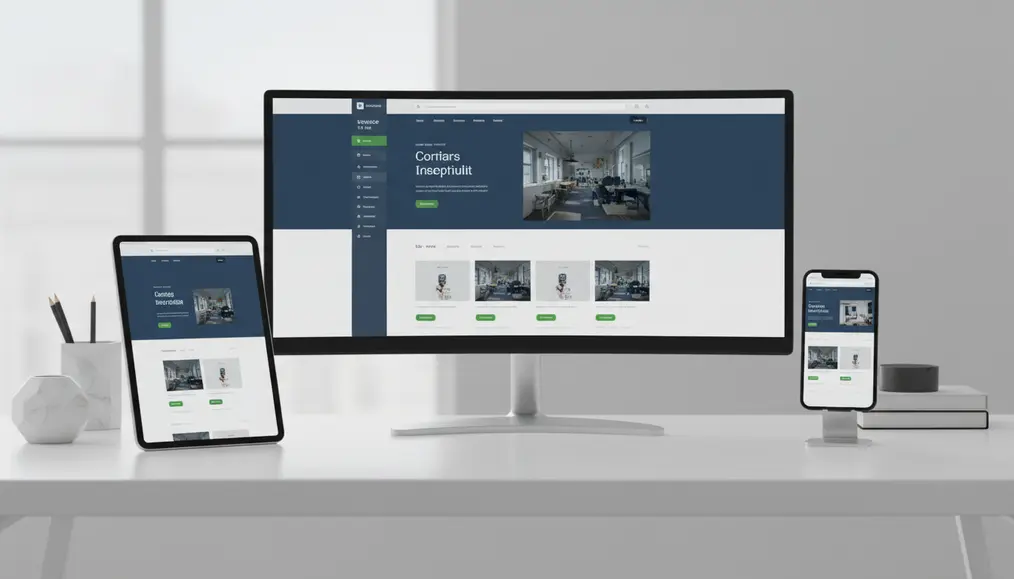
Achieving an exceptional website user experience isn't magic; it's the result of carefully considering several key elements of great UX. These components work together to ensure that visitors have a positive and productive interaction with your site.
Intuitive Navigation and Seamless Website Usability
Users should be able to find what they're looking for effortlessly. This means clear, logical navigation menus, consistent placement of elements, and easy-to-understand labels. If a user has to think too hard about where to go next, your website usability is suffering, and they'll likely leave. A well-structured information architecture and a search function are crucial elements for an intuitive experience.
Optimized Performance: Speed and Responsiveness
Slow loading times are a notorious killer of user satisfaction and a major contributor to high bounce rate. In our fast-paced world, users expect websites to load almost instantly. Furthermore, with the majority of internet traffic now coming from mobile devices, your website must be fully responsive, adapting seamlessly to various screen sizes and orientations. This mobile-first approach is fundamental to a modern website user experience. This is especially critical for businesses needing to load fast for their target market, like those in Australia, as detailed in Why Your Website Needs to Load Fast on Australian Mobile Networks.
Clear, Actionable Call-to-Actions
Every page on your website should have a clear purpose and guide the user toward the next logical step. Call-to-actions (CTAs) should be prominent, compelling, and easy to understand, telling users exactly what you want them to do (e.g., "Shop Now," "Learn More," "Contact Us"). Ambiguous CTAs create friction and hinder conversions.
Personalized Customer Journey
Understanding and optimizing the customer journey is paramount for exceptional UX. This involves mapping out the various touchpoints a user has with your brand, from initial awareness to post-purchase support, and ensuring each step is as smooth and delightful as possible. Personalization, where possible, can greatly enhance this journey, offering tailored content or product recommendations based on user behavior and preferences. This thoughtful approach helps to truly get better UX for your audience.
Measuring and Improving Your Website's UX
To truly harness the UX benefits, businesses need to continuously monitor and enhance their website user experience. This isn't a one-time task but an ongoing process of analysis, testing, and refinement.
Tools and Metrics: How to Measure UX
There are several ways to how to measure UX and gather valuable insights. Analytics tools (like Google Analytics) can provide data on bounce rate, time on page, pages per session, and conversion rates. Heatmaps and session recordings show how users interact with specific pages. User surveys and feedback forms allow you to gather direct input. A/B testing helps you compare different versions of a page to see which performs better. Combining these quantitative and qualitative data sources provides a comprehensive picture of your current website user experience.
Implementing a User-Centric Design Approach
An effective strategy for continuous improvement involves adopting a user-centric design methodology. This iterative process includes:
- Research: Understanding your target audience and their needs.
- Design: Creating prototypes and wireframes based on research.
- Testing: Gathering feedback from real users.
- Refinement: Making improvements based on test results.
This cycle ensures that every decision made throughout the development process is grounded in user insights, leading to a consistently evolving and improving website user experience. It’s also important to think about the underlying platform, and How to Choose a Website Platform That Grows With Your Business can greatly impact this iterative process.
Common UX Mistakes Businesses Make and How to Avoid Them
Even with good intentions, businesses often stumble when it comes to implementing strong website user experience. Recognizing these common pitfalls is the first step towards creating a more effective digital presence.
Overlooking Mobile Responsiveness
Despite the overwhelming statistics, many websites still aren't fully optimized for mobile devices. Tiny text, cramped layouts, and non-tappable buttons on a smartphone screen are immediate turn-offs and contribute significantly to a high bounce rate. Ensuring your site offers a seamless experience across all devices is fundamental for today's UX. Ignoring this vital aspect means missing out on a huge segment of potential customers.
Confusing Navigation and Information Overload
A common mistake is assuming users understand your internal company jargon or complex site structure. Cluttered menus, too many options, or unclear labels can overwhelm visitors and make it impossible for them to complete their tasks. Simplify your navigation, use clear and concise language, and organize content logically. The goal is to minimize cognitive load and make the customer journey effortless. This ties directly into creating a better website usability.
Slow Page Load Times
Patience is a virtue few possess online. If your website takes more than a couple of seconds to load, users will leave. Large image files, unoptimized code, and inefficient hosting can all contribute to slow speeds. Prioritize performance optimization to ensure your site is fast and responsive, directly impacting user satisfaction and website engagement. A slow site is a missed opportunity for conversions.
Ignoring User Feedback and Analytics
The biggest mistake is often a failure to listen to your users. Without collecting and analyzing feedback, you're guessing what works. Utilize analytics to pinpoint problematic areas (e.g., high exit rates on specific pages) and actively seek user input through surveys or testing. This data-driven approach is essential to improve website UX and continually refine your strategy. Learning how to measure UX effectively allows you to make informed improvements rather than operating on assumptions.
Why choose Bornneo.Lab for Website user experience?
- 🌟 Client-focused delivery with clear scope, timelines, and measurable outcomes aligned to your business goals.
- 🧩 End-to-end support from discovery and strategy to implementation, documentation, and handover.
- 📌 Practical solutions built to fit your existing stack and team workflow—no unnecessary complexity.
Conversion-Driven Design
We design digital experiences with a clear purpose. Every layout, interaction, and call-to-action is strategically crafted to guide users toward meaningful conversions—whether that means leads, sign-ups, or business inquiries.
Mobile-First & Responsive
With the majority of users accessing websites from mobile devices, we prioritize responsiveness from day one. Our solutions adapt seamlessly across screen sizes while maintaining performance and usability.
SEO & Performance Optimized
We build with technical SEO, site speed, and performance best practices in mind—helping your website earn visibility, trust, and sustainable organic growth.
Bornneo.Lab Client Testimonials
★★★★★ – Sarah L.: "Bornneo.Lab completely transformed our website user experience. Our conversion rates have seen a significant uplift, and our customers frequently comment on how easy our site is to use now."
★★★★★ – David M.: "We partnered with Bornneo.Lab to improve website UX, and they delivered beyond our expectations. Their focus on user-centric design made a real difference in our website engagement."
★★★★★ – Emily R.: "The team at Bornneo.Lab truly understands the importance of UX. Their insights helped us streamline our customer journey, leading to much higher user satisfaction."
★★★★★ – Mark T.: "Bornneo.Lab helped us understand UX from a business perspective. The impact on our online success has been undeniable, especially with the reduction in our bounce rate."
★★★★★ – Jessica P.: "From defining UX design principles to implementation, Bornneo.Lab was exceptional. Our new site reflects truly great design and usability, setting us apart in our digital presence."
READ ALSO: Why Your Website Needs to Load Fast on Australian Mobile Networks
Frequently Asked Questions About User Experience
What is the difference between UX and UI?
While often used interchangeably, UX (User Experience) and UI (User Interface) are distinct yet related. UX focuses on the overall feeling and ease of interaction a user has with a product or website. It's about the entire customer journey, from problem-solving to emotional response. UI, on the other hand, refers to the visual elements and interactive properties of a product's interface—the buttons, icons, typography, and layout. UI is a part of UX, contributing to the overall experience, but UX is the broader concept encompassing research, strategy, and interaction design that makes a product usable and enjoyable.
How can good UX directly impact my business's bottom line?
Good UX directly impacts your business's bottom line through several key avenues. It significantly boosts conversion rates by making it easier for users to complete desired actions like purchases or sign-ups. It reduces bounce rate and increases website engagement, meaning visitors stay longer and explore more, leading to higher brand recall and trust. Furthermore, an excellent website user experience can reduce customer support costs (as users find answers themselves), enhance customer loyalty, and ultimately provide a strong competitive advantage in your digital presence. These cumulative UX benefits lead to greater online success.
Is UX just for large businesses with big budgets?
Absolutely not. While large enterprises often have dedicated UX teams, the principles of good user experience are universally applicable and crucial for businesses of all sizes. Even small businesses can greatly improve website UX by focusing on core aspects like clear navigation, fast loading times, mobile responsiveness, and clear calls to action. The investment in UX can be scaled, and even small, targeted improvements can yield significant UX benefits in terms of conversions and user satisfaction. Bornneo.Lab works with businesses of all sizes to tailor user-centric design solutions.
How often should I review and update my website's UX?
Reviewing and updating your website's UX should be an ongoing, iterative process rather than a one-time event. User behaviors, technologies, and market trends constantly evolve. It's recommended to conduct regular UX audits, analyze website analytics for changes in bounce rate or engagement, and gather user feedback at least annually, if not quarterly. Major updates might be prompted by new product launches, rebranding efforts (like when Preparing Your Website for a Rebrand or a Fresh New Look), or significant shifts in your target audience's needs. Continuous improvement ensures your website user experience remains competitive and effective.
What are some basic steps to get started with improving my website's UX?
To get better UX, start by analyzing your current website's performance using tools like Google Analytics to identify high bounce rate pages or low conversion rates. Conduct simple user testing by asking a few people from your target audience to complete common tasks on your site while you observe. Gather feedback. Prioritize quick wins, such as optimizing image sizes for faster loading, simplifying navigation menus, and ensuring your site is fully mobile-responsive. Focus on understanding your users' pain points and addressing them systematically. Remember, even small improvements can significantly enhance your website user experience.
Contact Us
Ready to move forward with clarity and confidence? Get direct insights and tailored recommendations by speaking with our team.
Disclaimer: This article is intended for informational purposes only and does not constitute financial, legal, or professional advice. While we strive for accuracy, Bornneo.Lab makes no representations or warranties of any kind, express or implied, about the completeness, accuracy, reliability, suitability, or availability with respect to the website or the information, products, services, or related graphics contained on the website for any purpose. Any reliance you place on such information is therefore strictly at your own risk. Bornneo.Lab is not responsible for any loss or damage arising from the use of this information.