

Embarking on a new digital venture or looking to upgrade your existing online presence often begins with a critical decision: selecting the right website platform. It’s more than just picking a tool; it's about laying a foundational stone that can either support or hinder your future growth. Many businesses initially gravitate towards the easiest or cheapest option, only to find themselves constrained down the line, facing costly migrations or limitations that stifle their ambitions. The real challenge isn't just to launch a website, but to launch one that is a true scalable website solution.
The digital landscape is constantly evolving, and your business needs a home online that can evolve with it. Without careful consideration, you might invest significant time and resources into a platform that becomes a bottleneck rather than an enabler as your operations expand. This guide is designed to walk you through a thorough website platform comparison, helping you understand the nuances involved in making an informed choice. Our goal is to empower you to choose website platform that not only meets your current needs but is also future-proofed for sustained success, whether you're a burgeoning startup or an established enterprise looking to scale.
Making the right choice from the outset can save you immense headaches and expenditure later on. A robust platform allows for seamless integration of new features, handles increased traffic without a hitch, and adapts to changing market demands. Let's delve into the essential factors that will help you select website platform that truly grows with your business.
READ ALSO: How to Write Website Text That Speaks to Your Australian Customers
Understanding Your Business Needs Before a Website Platform Comparison

Before diving into a detailed website platform comparison, it's crucial to first conduct a comprehensive self-assessment of your business. What are your immediate goals? Are you primarily looking for lead generation, an e-commerce platform choice, a content hub, or a service booking system? More importantly, what are your long-term aspirations? Do you plan to expand into new markets, offer new services, or dramatically increase your product catalog? These questions are fundamental to identifying a scalable website solution.
Consider your budget, both initial setup and ongoing maintenance. While some platforms may seem cheap upfront, hidden costs for plugins, themes, or custom development can quickly add up. Think about the technical expertise within your team. If you lack dedicated developers, a platform with intuitive user interfaces and readily available support will be paramount. Conversely, if you have in-house development capabilities, you might prefer a more flexible, open-source web development frameworks option that allows for deep customisation. This initial introspection forms the bedrock for an effective CMS selection guide and helps tailor your search.
Key Factors for Choosing a Scalable Website Platform

When you're ready to compare website platforms, several key factors should guide your decision to ensure you select a platform that can genuinely grow with your business. Beyond basic functionality, look for characteristics that enable long-term sustainability and adaptability.
Scalability and Performance
The ability of a website platform to handle increased traffic and content without performance degradation is non-negotiable for future growth. A platform like WordPress, for example, is highly scalable, supporting everything from a simple blog to complex enterprise website platforms with the right hosting and optimisation. For e-commerce, platforms like Shopify or Magento are built with scalability in mind, designed to manage thousands of products and transactions. When evaluating a web platform, inquire about its capacity for expansion, database handling, and server infrastructure. A truly scalable website solution should never be the bottleneck to your success, even during peak traffic or significant content additions. For insights on measuring performance, you might find our article on How to Measure Your Website Success Without Being a Data Expert helpful.
Flexibility and Customisation Options
Your business is unique, and your website should reflect that. A platform offering robust customisation allows you to tailor the user experience, integrate specific business processes, and differentiate your brand. Consider the availability of themes, templates, plugins, and the ease of custom web development. Some platforms offer extensive APIs, allowing for integration with CRM systems, ERPs, and marketing automation tools, which are vital for digital transformation tools. While website builders like Squarespace offer beautiful designs, their customisation capabilities might be more limited compared to open-source content management systems (CMS) like Drupal or Joomla, which provide greater freedom for bespoke solutions. This flexibility is key to future-proof website design.
Security Features and Updates
In today's digital age, security breaches can severely damage your reputation and bottom line. A good website platform comes with built-in security features, regular updates, and robust community support or dedicated vendor teams committed to patching vulnerabilities. Ensure the platform supports SSL certificates, secure payment gateways (for e-commerce), and offers options for backups and disaster recovery. Neglecting security can lead to significant issues, so it's a critical aspect to consider when you choose website platform. Additionally, understanding local regulations, like those discussed in Why Your Website Needs a Privacy Policy to Meet Australian Laws, is essential for compliance.
SEO and Marketing Capabilities
Visibility is vital for any online business. The ideal website platform should be inherently SEO-friendly, offering features such as customisable meta tags, clean URL structures, fast loading times, and easy integration with analytics tools. Look for platforms that allow you to implement strong local link building for SEO strategies and manage content effectively. Many platforms have excellent blogging capabilities, which are crucial for organic traffic. Our article on How a Blog Can Help Your Business Get Found More Often on Google further highlights this importance. Effective CMS selection guide should always factor in how well the platform supports your marketing efforts.
Support and Community
Even the most experienced users encounter issues. The availability of reliable support – whether through documentation, forums, community groups, or dedicated vendor assistance – is invaluable. Open-source platforms often boast vast, active communities that provide free support and a wealth of resources. Proprietary platforms, on the other hand, typically offer dedicated customer service teams. Evaluate the quality and responsiveness of support channels as part of your website platform recommendations to avoid costly downtime or unresolved technical challenges.
Popular Website Platforms: A Brief Website Platform Comparison
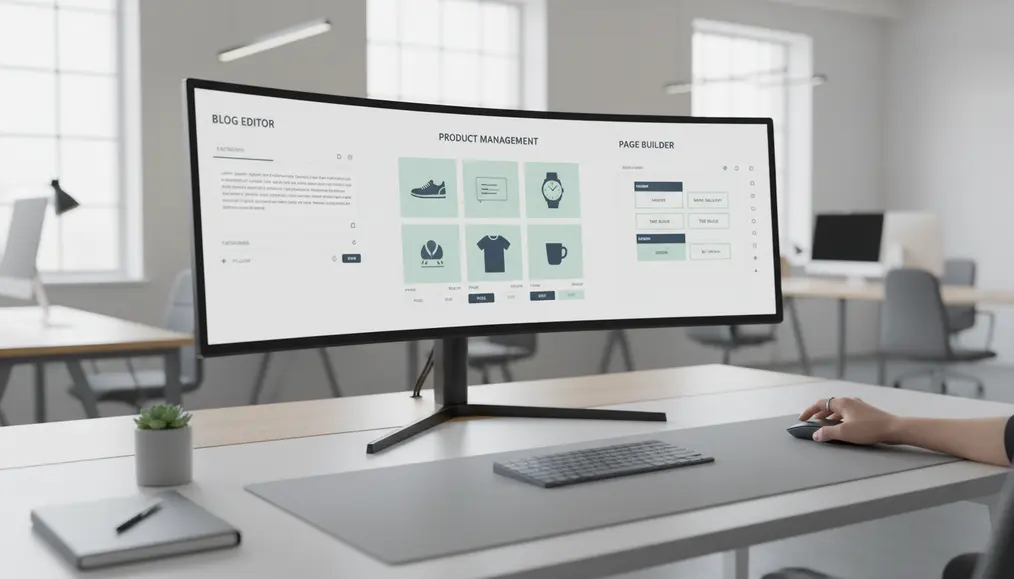
To help you compare website platforms, let's briefly look at some common types and examples, highlighting their strengths for different business sizes and growth trajectories.
Content Management Systems (CMS)
A CMS like WordPress, Joomla, or Drupal offers significant flexibility and power. WordPress, in particular, is dominant due to its user-friendliness, extensive plugin ecosystem, and strong community. It's an excellent small business website platforms choice that can scale significantly with the right hosting and development. Drupal is often preferred for more complex, data-heavy, or enterprise website platforms due to its robust architecture and security features. These platforms provide a solid foundation for content management systems and offer extensive opportunities for custom web development.
E-commerce Specific Platforms
For businesses focused on online sales, platforms like Shopify, Magento, and WooCommerce (a WordPress plugin) are tailored for e-commerce. Shopify is renowned for its ease of use, comprehensive features, and integrated payment processing, making it a great option for businesses looking for a quick launch and website platform recommendations for retail. Magento offers more extensive customisation and is often chosen by larger enterprises needing specific functionalities for their e-commerce platform choice. WooCommerce leverages WordPress's flexibility, combining content management with powerful online store capabilities. These platforms are inherently designed to be a scalable website solution for retail.
Website Builders
Platforms like Squarespace, Wix, and Webflow offer drag-and-drop interfaces that make website creation accessible to individuals without coding knowledge. They are excellent for small businesses, portfolios, or quick informational sites that need a visually appealing presence without complex functionalities. While they have become more powerful, their scalability for highly specific features or very large content databases can sometimes be limited compared to full CMS or custom web development. However, for those needing to how to choose a website builder that scales for initial growth, they offer a great starting point.
Custom Web Development
For businesses with highly unique requirements, complex integrations, or specific security needs, custom web development using web development frameworks like React, Angular, Vue.js, or backend languages like Python/Django or PHP/Laravel provides ultimate flexibility. While this involves a higher initial investment and requires experienced developers, it results in a precisely tailored, highly optimised, and truly future-proof website design. It’s the ideal path for businesses looking for a competitive edge through bespoke functionality and seeking an ultimate website platform for enterprise-level operations.
Making the Final Decision: Website Platform Recommendations

After your initial assessment and website platform comparison, the final decision involves weighing the trade-offs. There's no single "best" platform; only the best platform for your business at its current stage and projected growth. Consider these points:
- Long-Term Vision: Does the platform support your five-year plan? Think about potential feature additions, internationalisation, or new service lines. Is it easy to integrate with future tools? This is crucial for comparing website platforms for future expansion.
- Total Cost of Ownership (TCO): Beyond initial setup, factor in hosting, maintenance, security, updates, and potential development costs for custom features.
- Ease of Use vs. Power: A simpler platform might be easier to manage initially but could become restrictive. A powerful one might have a steeper learning curve but offers greater control.
- Ecosystem and Integrations: Does the platform seamlessly connect with the tools you already use (CRM, email marketing, analytics)?
- Developer Availability: If you plan on needing custom work, is there a good supply of developers experienced with your chosen platform? This is particularly relevant when deciding between open source vs proprietary platforms for business.
Choosing a website platform is a significant strategic decision. It impacts your operational efficiency, marketing capabilities, and ultimately, your ability to grow. Don't rush the process; invest time in research and, if necessary, seek expert guidance. At Bornneo.Lab, we specialise in helping businesses like yours navigate these complex choices, ensuring you select a scalable website solution that perfectly aligns with your ambitions.
Investing in your website is not just about the launch; it's about nurturing a digital asset that continues to deliver value. For more on this perspective, read our article Investing in Your Website: Understanding the Long-Term Value.
Why choose Bornneo.Lab for Website platform comparison?
- 🌟 Client-focused delivery with clear scope, timelines, and measurable outcomes aligned to your business goals.
- 🧩 End-to-end support from discovery and strategy to implementation, documentation, and handover.
- 📌 Practical solutions built to fit your existing stack and team workflow—no unnecessary complexity.
Conversion-Driven Design
We design digital experiences with a clear purpose. Every layout, interaction, and call-to-action is strategically crafted to guide users toward meaningful conversions—whether that means leads, sign-ups, or business inquiries.
Mobile-First & Responsive
With the majority of users accessing websites from mobile devices, we prioritize responsiveness from day one. Our solutions adapt seamlessly across screen sizes while maintaining performance and usability.
SEO & Performance Optimized
We build with technical SEO, site speed, and performance best practices in mind—helping your website earn visibility, trust, and sustainable organic growth.
Bornneo.Lab Client Testimonials
★★★★★ – David R.: Bornneo.Lab helped us navigate a complex website platform comparison and delivered a solution that perfectly fit our scaling needs. Their guidance was invaluable.
★★★★★ – Sarah L.: We needed a truly scalable website solution for our growing e-commerce. Bornneo.Lab's expertise in e-commerce platform choice was outstanding, and the results speak for themselves.
★★★★★ – Michael P.: Our previous website was holding us back. Bornneo.Lab not only redesigned it but also helped us choose website platform that supports our rapid expansion.
★★★★★ – Emily V.: The team at Bornneo.Lab made the daunting task of comparing website platforms for future expansion easy and understandable. Their recommendations were spot on.
★★★★★ – John K.: For our new venture, we wanted a future-proof website design. Bornneo.Lab’s CMS selection guide and implementation ensured we got exactly that.
READ ALSO: How to Use Local Links to Boost Your Website’s Search Ranking
Frequently Asked Questions About Website Platform Selection
What is the most important factor when choosing a website platform for business growth?
The most crucial factor is scalability. You need a website platform that can handle increased traffic, more content, new features, and integrations as your business expands without requiring a complete overhaul. This ensures your initial investment supports long-term success, making it a true scalable website solution.
Should I choose an open-source or proprietary website platform?
The choice between open source vs proprietary platforms for business depends on your resources and specific needs. Open-source platforms like WordPress or Drupal offer flexibility and often lower licensing costs but might require more technical expertise for customisation and maintenance. Proprietary platforms (e.g., Shopify, Squarespace) often include managed hosting and dedicated support, simplifying management but potentially limiting customisation options and leading to higher subscription fees. Your decision should align with your team's technical capabilities and desire for control during a website platform comparison.
How can I ensure my website platform is future-proof?
To ensure a future-proof website design, focus on platforms with strong API capabilities for integrations, a robust and active development community (for open-source options), consistent updates from vendors (for proprietary platforms), and a modular architecture that allows for easy addition of new features. Prioritise flexibility and adaptability over rigid, all-in-one solutions when you select website platform.
Is a website builder sufficient for a growing small business?
For initial stages, a website builder like Squarespace or Wix can be an excellent small business website platforms choice due to ease of use and quick launch times. However, for rapid growth, extensive customisation, or complex functionalities (like advanced e-commerce or unique third-party integrations), you might eventually outgrow them. It's important to assess how to how to choose a website builder that scales and if its limitations might become roadblocks down the line during your website platform comparison.
What role does custom web development play in scalability?
Custom web development using advanced web development frameworks offers the highest degree of scalability and customisation. While it requires a larger initial investment, it allows for a precisely tailored solution that can integrate seamlessly with all your existing systems and be built from the ground up to handle massive traffic and complex functionalities. This makes it an ideal website platform for enterprise-level operations or businesses with highly specific needs that off-the-shelf solutions cannot meet.
Contact Us
Ready to move forward with clarity and confidence? Get direct insights and tailored recommendations by speaking with our team.
Disclaimer
The information provided in this article is for general informational purposes only and does not constitute technical, financial, or legal advice. While Bornneo.Lab strives to provide accurate and up-to-date content, readers are encouraged to consult with experienced professionals for advice tailored to their specific situation. Bornneo.Lab is not responsible for any actions taken based on the information presented herein.