

In New Zealand, schools are vibrant hubs of learning, but behind the scenes, they often grapple with complex, time-consuming administrative tasks. From managing student enrollments and attendance to reporting, scheduling, and communication, the sheer volume of paperwork and manual processes can overwhelm staff, diverting valuable time and resources away from core educational objectives. This challenge becomes even more pronounced for institutions aiming for significant growth, as manual systems simply cannot keep pace with increasing demands. The good news? Solutions exist that can transform these operational hurdles into opportunities for greater focus on teaching and student success.
Imagine a school environment where routine operations run seamlessly, where data is effortlessly shared, and where staff can dedicate more energy to student support and curriculum development. This vision is not just aspirational; it's achievable through strategic work automation. By leveraging modern technology, NZ schools can alleviate the burden of repetitive tasks, significantly enhancing their overall operational capacity and paving the way for sustainable expansion. This article explores how targeted education management automation: scaling NZ schools can become a reality, offering concrete pathways to a more efficient and future-ready educational landscape.
READ ALSO: Construction Project Automation: Managing Site Data
Understanding the Need for School Automation in NZ

The landscape of NZ education is constantly evolving, with increasing expectations for transparency, accountability, and personalized learning experiences. Traditional methods of managing school operations, which often rely heavily on manual inputs and disconnected systems, are no longer sufficient to meet these modern demands. Schools in New Zealand face unique challenges, including diverse student populations, specific regulatory frameworks, and a drive to innovate educational practices. Without robust underlying infrastructure, even the most dedicated educators and administrators can find themselves bogged down by administrative tasks, hindering their ability to adapt and thrive.
Consider the daily operations: processing new student applications, updating family contact details, tracking attendance, scheduling parent-teacher conferences, managing school fees, and compiling reports for the Ministry of Education. Each of these activities, when performed manually, consumes significant staff hours that could otherwise be spent on more impactful student-facing initiatives. This is where school automation steps in as a critical enabler. It's not just about doing things faster; it's about doing them smarter, ensuring accuracy, consistency, and a better experience for students, parents, and staff alike. Furthermore, as schools look to expand their programs or student intake, the ability to scale operations without proportionally increasing administrative overhead becomes paramount. This makes the question of how to automate school administration not just a matter of efficiency, but a strategic imperative for growth.
Key Areas for Education Management Automation in New Zealand Schools
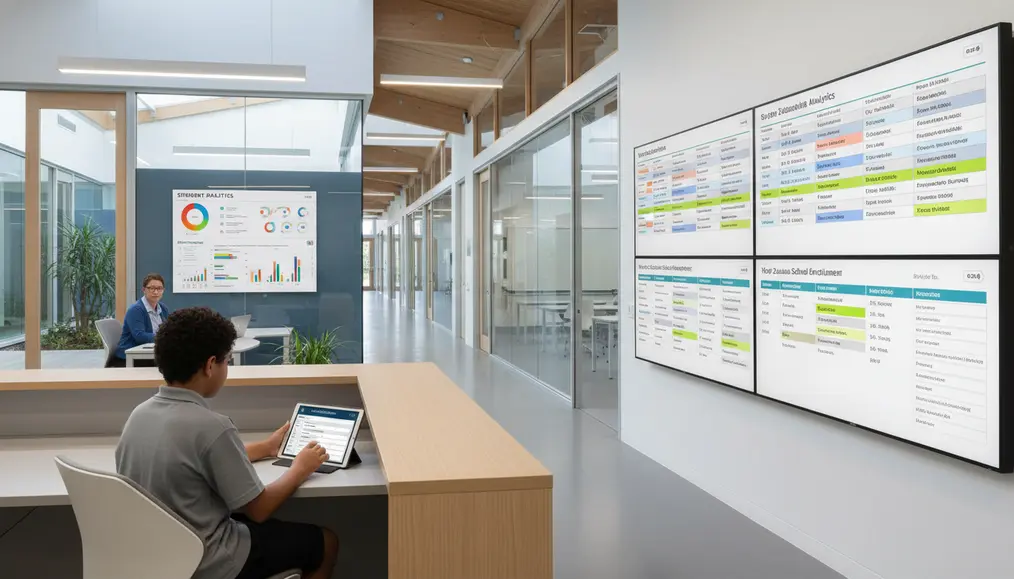
To effectively implement education management automation: scaling NZ schools, it's crucial to identify the areas that stand to benefit most from enhanced work automation. These are typically processes that are repetitive, rule-based, or involve high volumes of data entry and communication.
Student Information Systems (SIS) and Enrollment Automation
At the heart of any modern school is a robust student information system. Automating elements of the SIS can dramatically improve efficiency. This includes everything from initial inquiries to final enrollment. For example, implementing digital application forms, automated document collection, and integrated communication platforms can significantly automate school admissions NZ processes. Parents can upload documents, track application status, and receive automated updates, reducing the need for constant phone calls and emails. This streamlined approach also helps schools to streamline student enrollment process New Zealand wide, ensuring data accuracy from the outset and reducing bottlenecks during peak admission periods. An integrated SIS can also connect with learning management systems and communication platforms, creating a centralized hub for student data that underpins much of the school's operations.
Attendance and Grading Management
Recording attendance and managing grades are fundamental, yet often manual, administrative tasks. Automated systems can allow teachers to input attendance digitally, directly updating records and automatically flagging absences for follow-up. Similarly, grading systems can integrate with learning platforms to automatically record scores, calculate averages, and generate report cards, freeing up teacher time for instructional planning and student feedback. This workflow automation not only saves time but also improves the accuracy and timeliness of vital student data.
Communication and Parent Engagement
Effective communication is vital in education. Automated systems can facilitate mass notifications for school closures, event reminders, and newsletters. Personalized communications, such as progress reports or absence alerts, can be triggered automatically based on predefined criteria. This proactive communication enhances parent engagement and ensures that crucial information reaches the right people promptly, significantly improving admin efficiency. It helps schools maintain a strong connection with their community while minimizing the manual effort required from administrative staff.
Financial and Resource Management
Beyond student-centric tasks, automation can revolutionize financial operations. This includes automated invoicing for school fees, payment reminders, and expense tracking. Integrating these systems with accounting software provides real-time financial insights, aiding better resource allocation. Automating procurement processes, facility booking, and inventory management further contributes to overall efficiency gains, ensuring that resources are utilized optimally and transparently. This comprehensive process automation extends to managing school assets and budgets more effectively.
Reporting and Compliance Management
Schools in NZ are subject to various reporting requirements from the Ministry of Education and other regulatory bodies. Manual data collection and report generation are incredibly time-consuming and prone to error. With education management automation, data can be automatically aggregated from various systems, making report generation a much faster and more accurate process. This not only ensures timely submission but also strengthens compliance management, allowing schools to easily demonstrate adherence to standards and regulations. The ability to quickly generate accurate reports is a key benefit of education automation, providing valuable insights for strategic planning and decision-making.
Implementing Automation: A Strategic Approach for NZ Schools
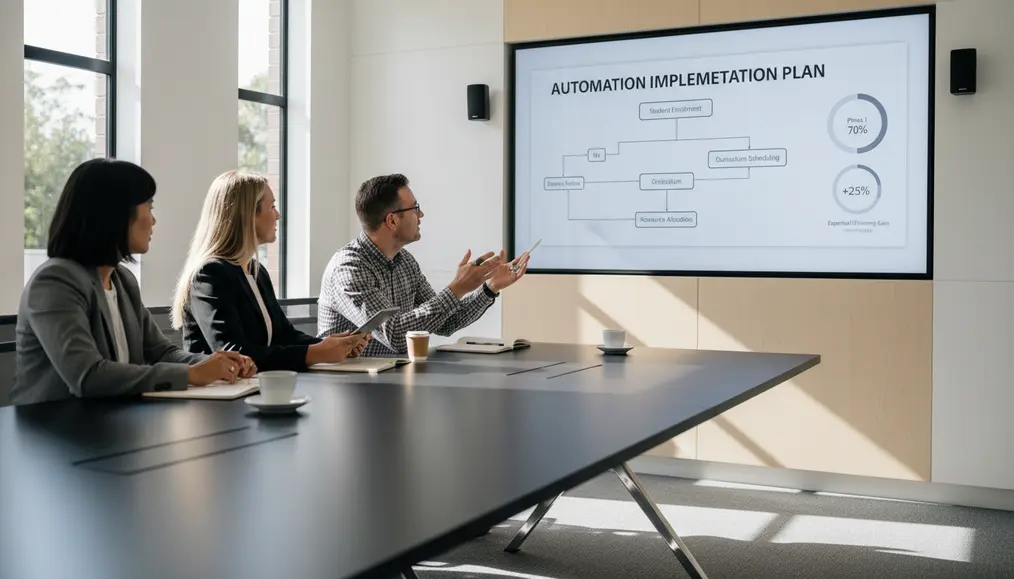
Successfully implementing automation in schools requires a thoughtful, strategic approach rather than a piecemeal one. It’s about more than just buying software; it’s about a holistic digital transformation that reimagines how administrative and educational processes interact. For schools seeking to become future-proof, understanding how to automate school administration effectively is crucial.
Assessment and Planning
The first step is a thorough assessment of current workflows. Identify pain points, bottlenecks, and areas where manual tasks are most prevalent and time-consuming. Engage staff from all departments to understand their needs and challenges. This foundational analysis will help define clear objectives for automation, such as "reduce enrollment processing time by 50%" or "improve parent communication response rates." Based on this, schools can research best automation tools for NZ schools that align with their specific requirements and budget. Bornneo.Lab can provide crucial data analytics support: helping you make smarter decisions in this initial phase.
Selecting the Right Educational Technology Solutions
The market offers a wide array of edtech solutions and education management software NZ tailored for schools. The key is to select systems that are scalable, user-friendly, and compatible with existing infrastructure. Prioritize solutions that offer robust system integration capabilities, allowing different modules (e.g., SIS, LMS, accounting) to communicate seamlessly. This avoids creating new data silos and ensures a unified view of operations. For example, platforms offering features like those found in Power Automate Solutions: Leveraging the Microsoft Ecosystem can provide flexible, integrated tools.
Phased Implementation and Training
Instead of a "big bang" approach, a phased implementation plan is often more successful. Start with one or two key areas that offer significant, visible gains, such as student admissions or attendance tracking. This allows staff to adapt gradually and builds confidence in the new systems. Comprehensive training for all users is non-negotiable. Staff must understand not only *how* to use the new tools but also *why* these changes are being made and the long-term benefits of education automation for the entire school community. Adequate support during the transition period is vital to ensure smooth adoption.
Monitoring, Evaluation, and Continuous Improvement
Automation is not a one-time project but an ongoing journey. Regularly monitor the performance of automated systems against the initial objectives. Collect feedback from staff, students, and parents. Use this data to identify areas for further optimization or new automation opportunities. As schools grow and technology evolves, there will always be new ways to refine processes and achieve even greater efficiency gains. This iterative approach ensures that the school continually leverages the full potential of its educational technology investments.
The Real Impact: Scaling NZ Schools with Automation
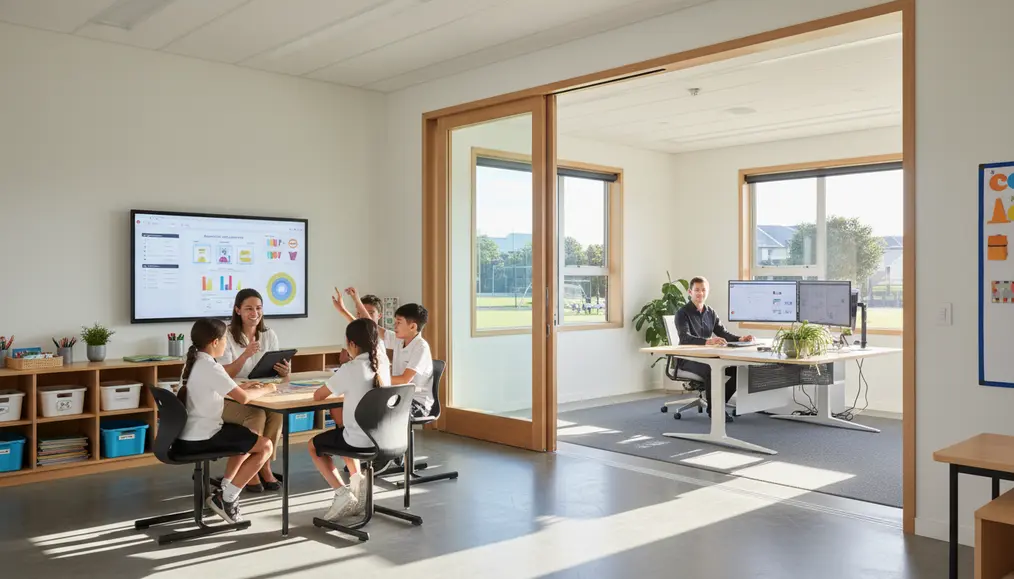
The ultimate goal of education management automation: scaling NZ schools is to enable growth without compromising quality or overburdening staff. When a school successfully implements work automation, the ripple effects are profound:
- Enhanced Student Experience: Students benefit from quicker access to information, streamlined enrollment, and a more organized learning environment.
- Empowered Educators: Teachers spend less time on paperwork and more time on teaching, lesson planning, and engaging with students, leading to improved educational outcomes.
- Efficient Administration: Administrative staff can focus on strategic initiatives and providing better support services, rather than repetitive data entry. This significantly boosts admin efficiency.
- Improved Data Accuracy: Automated systems reduce human error, leading to more reliable data for reporting, analysis, and decision-making. This is crucial for compliance management.
- Cost-Effectiveness: While there is an initial investment, the long-term cost-effective school automation reduces operational costs, saves countless staff hours, and optimizes resource allocation.
- Scalability: The ability to handle increased student numbers or expand programs without proportional increases in administrative staff is a game-changer for scaling schools.
Consider a school that wants to increase its student capacity by 20%. Without automation, this would likely mean hiring more administrative staff, increasing office space, and dealing with a surge in manual processes. With workflow automation in place, the existing team can manage the increased workload more effectively, leveraging digital tools to process applications, communicate with families, and update records at scale. This allows the school to focus its resources on hiring more teachers or investing in better learning facilities, directly benefiting the students.
The future of education management NZ lies in embracing these transformative technologies. Intelligent automation solutions, including those with AI capabilities, as discussed in Intelligent Automation Solutions: AI Meets Workflow, are poised to further revolutionize how schools operate, offering predictive analytics for student performance and even more personalized learning pathways. By adopting a forward-thinking approach to work automation, NZ schools can not only overcome current challenges but also build a robust foundation for future innovation and excellence.
Common Pitfalls and How to Avoid Them in School Automation
While the benefits of education automation are clear, there are common challenges schools face during implementation that can hinder success. Being aware of these pitfalls can help institutions in New Zealand navigate their digital transformation more smoothly and achieve true efficiency gains.
Lack of Clear Objectives
Without a clear understanding of what problems automation is intended to solve, projects can quickly lose focus. This often leads to implementing technology for technology's sake, rather than addressing specific pain points. To avoid this, schools should clearly define their goals from the outset, focusing on measurable outcomes. For instance, instead of saying "we want better admin," aim for "we want to reduce the time spent on attendance reconciliation by 30%." This specificity helps in selecting the right educational technology and evaluating its effectiveness.
Insufficient Staff Buy-in and Training
Resistance to change is natural. If staff members aren't adequately involved in the planning process or don't receive comprehensive training, they may be reluctant to adopt new systems. This can lead to underutilization of expensive software or, worse, a return to old manual methods. To counter this, foster a culture of collaboration, involving staff from early planning stages. Highlight how work automation will make their jobs easier, not more complex. Invest heavily in ongoing training and provide accessible support channels. Emphasize that automation is about augmenting human capabilities, not replacing them.
Ignoring System Integration Needs
One of the biggest mistakes is implementing standalone systems that don't communicate with each other. This creates new data silos and negates many of the efficiency gains automation aims to achieve. For example, if your student information system doesn't talk to your learning management system or financial software, staff will still be manually transferring data between them. Prioritizing system integration from the start is paramount. Look for edtech solutions that are designed to integrate or partner with providers who specialize in connecting disparate systems. This ensures a cohesive flow of information across the entire school ecosystem, providing a truly unified view of operations.
Overlooking Data Security and Compliance
Automating processes often involves handling sensitive student and staff data. Neglecting data security and privacy protocols can lead to serious breaches and violate local regulations, particularly under New Zealand's privacy laws. Schools must ensure that any automated systems chosen meet stringent security standards and aid in compliance management. This includes robust access controls, encryption, and regular data backups. Consulting with legal experts or technology partners like Bornneo.Lab, who also support sectors like automating legal workflows: efficiency for AU law firms, can help ensure that all solutions comply with relevant privacy and data protection mandates.
Failing to Adapt and Optimize
The journey of education management automation doesn't end after initial implementation. Technology evolves, and so do the needs of schools. A common pitfall is to set and forget. Successful digital transformation requires continuous monitoring, evaluation, and adaptation. Regularly review the performance of automated workflows, gather feedback, and be prepared to make adjustments. This iterative approach ensures that the automation continues to deliver maximum value and helps schools stay agile in response to changing demands. Utilizing tools for continuous data analysis, similar to what's provided by data analytics as a service: scalable insights, can assist schools in fine-tuning their automated processes over time.
Bornneo.Lab's Approach to Education Management Automation
At Bornneo.Lab, we understand that each school in New Zealand has unique challenges and aspirations. Our approach to education management automation: scaling NZ schools is built on a foundation of deep analysis, collaborative partnership, and tailored solutions. We don't just implement software; we empower schools with the tools and strategies for sustainable growth and operational excellence.
Discovery and Strategy for NZ Education
Our process begins with an in-depth discovery phase where we work closely with your school's leadership, administration, and teaching staff. We aim to gain a comprehensive understanding of your existing administrative tasks, current pain points, and long-term strategic goals for NZ education. This involves mapping out current workflow automation processes, identifying redundant steps, and pinpointing areas where work automation can yield the most significant impact. This strategic blueprint forms the foundation for a customized automation roadmap.
Tailored Solution Design and System Integration
Leveraging our expertise in digital transformation, we design edtech solutions that are specifically tailored to your school's needs. Whether it's enhancing your student information systems, automating admissions, or streamlining financial processes, our focus is on creating cohesive and integrated solutions. We prioritize robust system integration to ensure that all modules communicate seamlessly, eliminating data silos and maximizing efficiency gains. Our solutions are built to be scalable, supporting your school as it continues to grow and evolve.
Implementation, Training, and Ongoing Support
Once the solution is designed, our experienced team manages the implementation process, ensuring minimal disruption to your daily operations. We believe that successful adoption hinges on comprehensive training. Therefore, we provide hands-on training sessions for all relevant staff, ensuring they are proficient and confident in utilizing the new automated systems. Our commitment doesn't end at deployment; Bornneo.Lab offers ongoing support and maintenance, ensuring your educational technology infrastructure remains robust, secure, and up-to-date. This partnership approach ensures that your investment in education management automation continues to deliver value, making your school a leader in the future of education management NZ.
Why choose Bornneo.Lab for Work automation?
- 🌟 Client-focused delivery with clear scope, timelines, and measurable outcomes aligned to your business goals.
- 🧩 End-to-end support from discovery and strategy to implementation, documentation, and handover.
- 📌 Practical solutions built to fit your existing stack and team workflow—no unnecessary complexity.
Conversion-Driven Design
We design digital experiences with a clear purpose. Every layout, interaction, and call-to-action is strategically crafted to guide users toward meaningful conversions—whether that means leads, sign-ups, or business inquiries.
Mobile-First & Responsive
With the majority of users accessing websites from mobile devices, we prioritize responsiveness from day one. Our solutions adapt seamlessly across screen sizes while maintaining performance and usability.
SEO & Performance Optimized
We build with technical SEO, site speed, and performance best practices in mind—helping your website earn visibility, trust, and sustainable organic growth.
Bornneo.Lab Client Testimonials
★★★★★ – Sarah J.: "Bornneo.Lab transformed our school's enrollment process. What used to take weeks of manual work is now handled efficiently with their automation solutions. Truly a game-changer for our NZ education institution."
★★★★★ – David L.: "We partnered with Bornneo.Lab to streamline our administrative tasks, and the efficiency gains have been remarkable. Our staff are less stressed and more focused on our students."
★★★★★ – Emily R.: "Their team's expertise in system integration was invaluable. Our new student information system now talks seamlessly with our other platforms, making data management so much easier. Highly recommend Bornneo.Lab for school automation."
★★★★★ – Michael K.: "Bornneo.Lab helped us understand how to automate school administration effectively. Their phased approach and comprehensive training made the transition smooth, and we are now much better equipped for scaling schools."
★★★★★ – Olivia P.: "From initial consultation to ongoing support, Bornneo.Lab has been an excellent partner in our digital transformation. Their solutions are truly cost-effective school automation for a sustainable future."
READ ALSO: Healthcare Automation: Improving Patient Care in NZ
Frequently Asked Questions About Education Management Automation
What exactly is education management automation?
Education management automation refers to the use of technology to streamline and automate various administrative tasks and operational workflows within an educational institution. This includes processes like student enrollment, attendance tracking, grading, communication, financial management, and reporting. The goal is to reduce manual effort, improve efficiency, enhance accuracy, and free up staff to focus on core educational activities. It's a key part of digital transformation for schools looking to achieve efficiency gains.
What are the main benefits of education automation for NZ schools?
The benefits of education automation for NZ education institutions are numerous. They include significant time savings for administrative and teaching staff, improved data accuracy and compliance management, enhanced communication with parents and students, better resource allocation, and the ability to handle increased student numbers or programs more easily, thus facilitating scaling schools. Ultimately, it leads to a more organized, productive, and student-focused environment, offering cost-effective school automation solutions.
Is implementing automation expensive for schools?
The initial investment for implementing automation in schools can vary depending on the scope and complexity of the chosen edtech solutions. However, it's generally considered a strategic investment that offers substantial long-term returns. By reducing manual labor, minimizing errors, and optimizing workflows, schools can achieve significant efficiency gains and operational cost savings over time. Many solutions also offer phased implementation to manage budgets effectively, making it a truly cost-effective school automation strategy in the long run.
How long does it take to implement school automation?
The timeline for school automation implementation depends on several factors, including the size of the school, the complexity of existing processes, and the scope of the automation project. A comprehensive digital transformation involving multiple system integration points might take several months, while automating specific administrative tasks like student admissions could be quicker. A phased approach is often recommended, allowing schools to see initial efficiency gains and adapt gradually. Bornneo.Lab works with schools to create realistic timelines and minimize disruption.
Will automation replace human jobs in schools?
The primary aim of work automation in education is not to replace human staff but to augment their capabilities and free them from repetitive, mundane administrative tasks. By automating these processes, staff members can reallocate their time and skills to more strategic, creative, and student-facing activities that require human judgment, empathy, and direct interaction. Automation enhances job satisfaction and allows educators and administrators to focus on what they do best, contributing to a better overall educational experience and a more efficient NZ education system.
Contact Us
Ready to move forward with clarity and confidence? Get direct insights and tailored recommendations by speaking with our team.
Disclaimer: The information provided in this article is for general informational purposes only and does not constitute professional advice. While we strive to ensure accuracy, Bornneo.Lab makes no representations or warranties of any kind, express or implied, about the completeness, accuracy, reliability, suitability, or availability with respect to the website or the information, products, services, or related graphics contained on the website for any purpose. Any reliance you place on such information is therefore strictly at your own risk. We recommend consulting with an experienced Bornneo.Lab expert for advice tailored to your specific situation.