

In today's fast-paced digital world, it's rare to find someone who isn't constantly connected, whether for work, communication, or entertainment. Our smartphones have become an indispensable tool, a pocket-sized portal to information and services available at a moment's notice. This ubiquitous mobile usage has profoundly reshaped how businesses need to present themselves online. If your website isn't designed to be accessible and functional on a smaller screen, you're not just missing an opportunity; you're actively alienating a significant portion of your potential audience.
Imagine a busy professional trying to quickly find your services while commuting, or a potential customer browsing products during a lunch break. If their experience is hampered by tiny text, clumsy navigation, or slow loading times, they won't hesitate to move on to a competitor. This is where the power of Mobile friendly web design truly shines, transforming potential frustration into seamless engagement. It’s no longer a nice-to-have feature but a fundamental requirement for any business looking to thrive online and connect with people on the go.
The core challenge for many businesses lies in understanding the shift in user behavior and adapting their digital presence accordingly. We're talking about more than just a shrunk-down version of your desktop site; it's about creating an optimized experience that caters specifically to the needs and limitations of mobile users. This article will delve into the critical aspects of why a mobile friendly approach is essential for your online success and how it impacts everything from user satisfaction to your search engine visibility.
READ ALSO: Outsourcing vs In-house Web Development for AU Startups
Why Mobile Friendly Web Design Isn't Optional Anymore

The digital landscape has undergone a dramatic transformation over the past decade. What was once primarily a desktop experience has overwhelmingly shifted to mobile. As more users access the internet from smartphones and tablets, the demand for mobile friendly websites has skyrocketed. Businesses that neglect this crucial aspect risk being left behind in a competitive market. It’s about meeting your audience where they are, and increasingly, that’s on a mobile device.
The Rise of People on the Go
The modern consumer is perpetually on the go. Whether it's checking emails during a coffee break, researching products while waiting for an appointment, or even making purchases from public transport, mobile devices facilitate constant connectivity. This means your website must be instantly accessible and fully functional across various contexts. If a site isn't designed for quick, efficient mobile interaction, it fails to serve this vast segment of users. Mobile friendly web design is about empowering these users, ensuring they can access information, engage with content, and complete actions regardless of their location or device.
Impact on User Experience (UX) on Mobile
A poor User experience (UX) on mobile can be detrimental to your brand. Frustrations such as tiny, unreadable text, buttons too close together, or forms that are difficult to fill out will quickly drive users away. Conversely, a well-executed mobile UX provides intuitive navigation, readable content, and easy interaction. When users have a positive experience, they are more likely to stay on your site longer, explore more pages, and ultimately convert into customers. This directly addresses the intent keywords related to wanting to improve mobile experience for visitors.
Key Benefits of Responsive Website Development
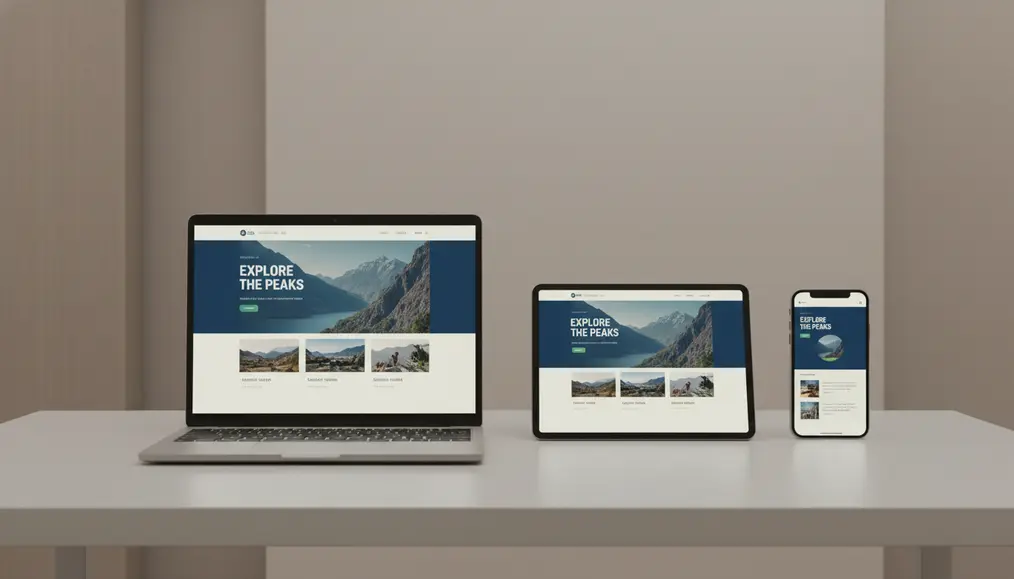
Investing in responsive website development is not merely about adapting to trends; it’s a strategic decision that yields significant benefits for your business. It impacts everything from how people perceive your brand to your search engine visibility and ultimately, your bottom line.
Improved Mobile Search Ranking
Search engines like Google prioritize user experience, and a significant part of that is mobile compatibility. Google employs mobile-first indexing, meaning it primarily uses the mobile version of your website for ranking and indexing. This makes mobile search ranking a critical factor for online visibility. Websites that are not mobile friendly often suffer from lower rankings, making it harder for potential customers to find you. By adopting responsive design, you signal to search engines that your site provides a good experience for all users, leading to better positioning in search results. This directly answers the question of why mobile responsive design matters for SEO.
Enhanced Page Loading Speed
Mobile users expect speed. Studies consistently show that a delay of even a few seconds in page loading speed can lead to significant bounce rates. A properly optimized mobile friendly site ensures that images are compressed, code is streamlined, and content loads quickly, regardless of the device or network speed. Faster loading times not only improve the User experience (UX) on mobile but also positively influence your mobile search ranking, as speed is a recognized ranking factor. Bornneo.Lab focuses on technical efficiency to ensure your site is always fast, helping you in upgrading your website to handle more customers and sales.
Better Mobile Usability and Accessibility
At its heart, mobile friendly web design is about enhancing mobile usability. This means elements like touch targets are large enough, forms are easy to complete, and navigation is intuitive on smaller screens. Furthermore, a well-designed mobile friendly site often inherently improves accessibility for users with disabilities, as it requires clear layouts and logical content flow. This focus on inclusive design broadens your audience and demonstrates a commitment to serving all potential customers. For businesses that need mobile friendly website solutions, this aspect is non-negotiable.
Increased Conversions and Engagement
When users have a smooth, enjoyable experience on your mobile site, they are far more likely to engage with your content, fill out a contact form, or make a purchase. A cumbersome mobile experience creates friction, leading to abandoned carts and missed opportunities. By providing a seamless flow, from browsing to conversion, responsive website development directly contributes to higher engagement rates and improved business outcomes. This highlights the substantial benefits of mobile friendly websites in driving actual business growth and making a great first impression with web design.
Understanding Mobile Optimization Strategies

Achieving a truly mobile friendly website goes beyond simply shrinking your desktop version. It involves thoughtful mobile optimization strategies that consider various technical and design elements. Understanding these strategies is key to ensuring your site performs optimally across all devices.
Adaptive Design vs. Responsive Design
While often used interchangeably, there's a subtle but important distinction between adaptive design and responsive design. Responsive design uses fluid grids and flexible images to adapt content to any screen size, typically using CSS media queries. It’s a single website that "responds" to the user's device. Adaptive design, on the other hand, detects the device type and delivers a pre-defined layout optimized for that specific screen size. While both aim for cross-device compatibility, responsive design is generally preferred for its flexibility and future-proofing, allowing a consistent experience across an ever-growing array of devices. Bornneo.Lab specializes in modern responsive website development to ensure maximum reach.
Mobile-First Indexing Explained
As mentioned earlier, Google's shift to mobile-first indexing underscores the paramount importance of your mobile site. Previously, Google primarily used the desktop version of a site for indexing and ranking. Now, it uses the mobile version. This means if your mobile site is missing content, has broken links, or offers a poor experience, it directly harms your overall search performance, even for desktop searches. To succeed, businesses must ensure their mobile site is not just an afterthought but a fully robust and optimized digital asset. This makes understanding and implementing Google mobile guidelines absolutely essential.
Adhering to Google Mobile Guidelines
To ensure your website performs well on mobile and ranks favorably, it's crucial to adhere to Google mobile guidelines. These guidelines emphasize factors like readable text, ample spacing for touch elements, avoiding unplayable content, and ensuring fast load times. Tools like Google's Mobile-Friendly Test can help you check mobile friendly status and identify areas for improvement. Compliance with these guidelines not only improves your search engine performance but also guarantees a superior User experience (UX) on mobile, which is the ultimate goal of any strong online presence. For businesses looking to optimize for mobile users, these guidelines are your blueprint.
Common Mistakes in Non-Mobile Friendly Sites

Many businesses unknowingly fall into traps that hinder their mobile user experience. Recognizing these common pitfalls is the first step toward understanding the importance of responsive web design for businesses.
Zooming and Pinching Frustration
One of the most immediate signs of a non-mobile friendly website is the need for users to constantly zoom in and out to read text or interact with elements. This creates immense frustration and makes navigation a chore. On a properly designed mobile friendly site, text is appropriately sized, and content flows naturally within the screen's dimensions, eliminating the need for such cumbersome actions. This ensures good mobile usability.
Slow Load Times on Mobile
While desktop internet connections are often robust, mobile users might be on slower Wi-Fi or cellular networks. Websites not optimized for mobile often load large, uncompressed images or heavy scripts, leading to agonizingly slow page loading speed. This directly impacts bounce rates, as users are quick to abandon sites that take too long to load. Optimizing images and leveraging caching are crucial mobile optimization strategies to combat this.
Broken Forms and Buttons
Imagine trying to fill out a contact form or click a "Buy Now" button, only for it to be too small, overlap with other elements, or simply not respond to touch. This is a common issue on sites lacking responsive design. Critical interactive elements must be clearly visible, easily tappable, and function flawlessly on mobile to facilitate conversions. This directly undermines the attempt to improve mobile experience for users.
How to Check Mobile Friendly Status
Unsure about your website's current mobile performance? There are several tools and methods to quickly check mobile friendly status and identify areas for improvement.
Google's Mobile-Friendly Test
Google offers a free and easy-to-use Mobile-Friendly Test tool. Simply enter your website's URL, and it will analyze your page, telling you if it's considered mobile friendly by Google's standards and highlighting any specific issues found. This is an indispensable resource for understanding how Google perceives your site's mobile usability and adherence to Google mobile guidelines.
Browser Developer Tools
Most modern web browsers, like Chrome, Firefox, and Edge, include developer tools that allow you to simulate various mobile devices. By opening these tools (usually by pressing F12 or right-clicking and selecting "Inspect") and toggling the device toolbar, you can view how your website renders on different screen sizes and resolutions. This hands-on approach helps you visually identify navigation issues, text legibility problems, and responsiveness glitches that impact User experience (UX) on mobile. It's a great way to truly understand the impact of mobile friendliness on user engagement.
The Impact of Mobile Friendliness on User Engagement
User engagement is the cornerstone of online success. A website that fosters engagement keeps visitors on the page longer, encourages interaction, and builds a stronger connection with your brand. Mobile friendly web design plays a pivotal role in achieving this.
Building Trust and Credibility
A well-designed, functional, and mobile friendly website conveys professionalism and attention to detail. Conversely, a poorly optimized mobile site can make your business appear outdated or uncaring about its online presence. For people on the go, a seamless mobile experience builds immediate trust and credibility, signaling that your business is reliable and forward-thinking. This contributes to making a great first impression with web design.
Reducing Bounce Rates
Bounce rate refers to the percentage of visitors who leave your site after viewing only one page. High bounce rates on mobile are often a direct result of poor mobile usability and slow page loading speed. When users encounter difficulties, they "bounce" back to the search results to find a better alternative. By implementing responsive website development, you create an environment where users are comfortable exploring your content, significantly reducing bounce rates and increasing the chances of conversion.
Fostering Repeat Visits
A positive mobile experience is memorable. When users can easily access information, navigate your site, and complete tasks on their smartphones, they are far more likely to return. This loyalty is invaluable for any business, driving repeat traffic and fostering long-term customer relationships. Continuously keeping website content fresh and up to date on a mobile-friendly platform also contributes to repeat visits, as users know they will find relevant and accessible information.
Why Mobile Responsive Design Matters for Your Business Growth
Beyond the technical advantages and improved user experience, the fundamental truth is that mobile friendly web design is a powerful engine for business growth. In an increasingly mobile-first world, ignoring this aspect means sacrificing market share and hindering your ability to connect with a vast audience.
Consider a small e-commerce business specializing in handcrafted jewelry. If their website is not mobile friendly, a potential customer browsing on their phone during a commute might struggle to view product images, read descriptions, or navigate the checkout process. Frustrated, they'll likely abandon the site and find a competitor with a better mobile experience. This represents a lost sale, a lost customer, and a damaged brand reputation. Conversely, if the site offers a beautiful, fast, and easy-to-use mobile experience, that same customer might effortlessly complete their purchase, becoming a loyal client. This scenario clearly illustrates the direct financial implications and emphasizes the importance of responsive web design for businesses looking to turn their website into an online shop to sell products.
For service-based businesses, such as local tradies or consultants, having a mobile friendly site means potential clients can easily find your contact information, view your services, and request a quote while they're literally standing outside their home or office. This immediate accessibility is crucial for capturing leads from people on the go. An optimized site allows you to leverage every opportunity, making it a powerful tool for customer acquisition and retention. It's how a website helps local tradies and shops get more jobs.
The imperative to optimize for mobile users is not a fleeting trend but a fundamental shift in how businesses must operate digitally. It's about ensuring your digital front door is always open, welcoming, and easy to navigate for everyone, regardless of the device they choose. Embracing mobile website solutions is an investment in your future, securing your relevance and competitiveness in the digital marketplace. It’s also important to leverage website data to understand what your customers want, which includes analyzing mobile user behavior to continually refine your mobile experience.
Choosing the Right Partner for Your Mobile Website Solutions
Implementing effective mobile friendly web design requires specialized knowledge and experience. It's not just about aesthetics; it's about robust technical implementation, adherence to search engine guidelines, and a deep understanding of User experience (UX) on mobile. Partnering with a skilled web development team can ensure your site is not only visually appealing but also highly functional and optimized for all devices, leading to measurable business growth.
When selecting a partner, look for those who prioritize responsive website development from the outset, who understand the nuances of mobile-first indexing, and who are adept at crafting effective mobile optimization strategies. An experienced team will focus on delivering excellent page loading speed, intuitive mobile usability, and overall cross-device compatibility. They will also be up-to-date with the latest Google mobile guidelines, ensuring your site is built for long-term success. This expertise is crucial for any business that truly understands the value of a high-performing, mobile friendly digital presence.
Bornneo.Lab provides comprehensive web development services tailored to meet the specific needs of modern businesses, ensuring your site is perfectly equipped to serve people on the go. We believe in crafting solutions that are not just beautiful but also strategic, performance-driven, and designed to generate real results for you. Our goal is to empower your business with a truly mobile friendly website that enhances your online presence, improves your search engine visibility, and significantly boosts your user engagement and conversions.
Why choose Bornneo.Lab for Mobile friendly web design?
- 🌟 Client-focused delivery with clear scope, timelines, and measurable outcomes aligned to your business goals.
- 🧩 End-to-end support from discovery and strategy to implementation, documentation, and handover.
- 📌 Practical solutions built to fit your existing stack and team workflow—no unnecessary complexity.
Conversion-Driven Design
We design digital experiences with a clear purpose. Every layout, interaction, and call-to-action is strategically crafted to guide users toward meaningful conversions—whether that means leads, sign-ups, or business inquiries.
Mobile-First & Responsive
With the majority of users accessing websites from mobile devices, we prioritize responsiveness from day one. Our solutions adapt seamlessly across screen sizes while maintaining performance and usability.
SEO & Performance Optimized
We build with technical SEO, site speed, and performance best practices in mind—helping your website earn visibility, trust, and sustainable organic growth.
Bornneo.Lab Client Testimonials
★★★★★ – David Chen: "Bornneo.Lab delivered an outstanding responsive website for our startup. The team truly understood our needs for a mobile friendly presence, and the launch was seamless."
★★★★★ – Sarah Kim: "Our website's mobile search ranking improved dramatically after Bornneo.Lab redesigned it with a focus on responsive design. We've seen a noticeable increase in mobile traffic."
★★★★★ – Michael Rodriguez: "The User experience (UX) on mobile for our e-commerce site is now fantastic, thanks to Bornneo.Lab's meticulous attention to detail. Our customers love it, and our conversions are up."
★★★★★ – Emily White: "We needed a complete overhaul to improve our page loading speed on mobile. Bornneo.Lab's mobile optimization strategies were incredibly effective and delivered results beyond our expectations."
★★★★★ – James Thompson: "From understanding Google mobile guidelines to implementing flawless cross-device compatibility, Bornneo.Lab demonstrated exceptional expertise in building our mobile friendly platform."
READ ALSO: Cost-Effective Cloud Hosting Strategies for New AU Web Apps
Frequently Asked Questions about Mobile Friendly Websites
What does "mobile friendly" actually mean for a website?
A website is considered mobile friendly if it provides an optimal viewing and interaction experience across a wide range of devices, from desktop computers to mobile phones and tablets. This means easy readability with minimal resizing, panning, or scrolling; flexible images and layouts; and accessible navigation that works well with touchscreens. Essentially, it ensures a seamless User experience (UX) on mobile for people on the go.
Why is mobile friendliness so important for my business's search ranking?
Google explicitly states that mobile friendly websites are favored in search results, especially since the introduction of mobile-first indexing. This means Google primarily uses the mobile version of your content for indexing and ranking. A non-mobile friendly site can lead to lower mobile search ranking, making it harder for potential customers to find your business. Adhering to Google mobile guidelines is crucial for visibility.
What are the main differences between responsive and adaptive design?
Both responsive design and adaptive design aim for cross-device compatibility. Responsive design uses fluid grids and flexible elements to dynamically adjust to any screen size, typically with a single codebase. Adaptive design, conversely, serves different, pre-defined layouts based on the device's screen size. While responsive is often more versatile for the long term, both are effective mobile optimization strategies.
How can a slow page loading speed on mobile impact my business?
A slow page loading speed on mobile devices can severely harm your business. Mobile users expect immediate access; even a few seconds of delay can lead to high bounce rates and lost conversions. Beyond direct user frustration, slow sites are penalized in mobile search ranking by search engines, further reducing your visibility. Optimizing for speed is a key part of any good mobile friendly web design.
Is it possible to check if my current website is mobile friendly?
Yes, absolutely! You can easily check mobile friendly status using tools like Google's free Mobile-Friendly Test. Simply enter your URL, and it will analyze your site and provide a report on its mobile compatibility. Additionally, using browser developer tools allows you to preview your site on various simulated mobile devices, giving you a visual sense of its mobile usability and overall User experience (UX) on mobile.
What are some immediate benefits of improving my website's mobile experience?
Improving your website's mobile experience can lead to several immediate benefits. You'll likely see an increase in your mobile search ranking, lower bounce rates, and higher user engagement. Enhanced page loading speed and intuitive mobile usability contribute to better conversion rates, as users can easily navigate and complete actions. Ultimately, it strengthens your brand's presence for people on the go and reinforces the importance of responsive web design for businesses.
Contact Us
Ready to move forward with clarity and confidence? Get direct insights and tailored recommendations by speaking with our team.
Disclaimer: The information provided in this article is for general informational purposes only and does not constitute technical or business advice. While Bornneo.Lab strives to provide accurate and up-to-date content, web development best practices and search engine algorithms are constantly evolving. Readers are encouraged to consult with experienced web development professionals for advice tailored to their specific circumstances. Bornneo.Lab is not responsible for any actions taken based on the information presented herein. All service claims and testimonials refer to services provided by Bornneo.Lab.