

In today's fast-paced business world, the allure of automation is undeniable. Companies everywhere are looking for ways to cut costs, boost productivity, and deliver better services. However, many rush into implementing automation solutions without a clear understanding of what they are actually trying to automate. This often leads to fragmented systems, missed opportunities for genuine `efficiency gains`, and ultimately, frustration.
Before you can effectively `automate business processes`, there's a fundamental, non-negotiable step: you must first understand them. This is where mapping out processes becomes indispensable. It's the critical foundation upon which all successful automation efforts are built, providing clarity, revealing bottlenecks, and ensuring that you're not simply automating inefficiencies.
Imagine trying to navigate a complex city without a map. You might get somewhere, but it's likely to be circuitous, time-consuming, and prone to errors. The same applies to your business operations. Without a clear map, how can you identify the best routes for automation or even know where you're starting from? Mapping out processes helps you plot the most direct and effective path to `automation success`.
READ ALSO: The Guide to Automating Business Processes in 2026
Understanding the Core of Process Mapping for Automation

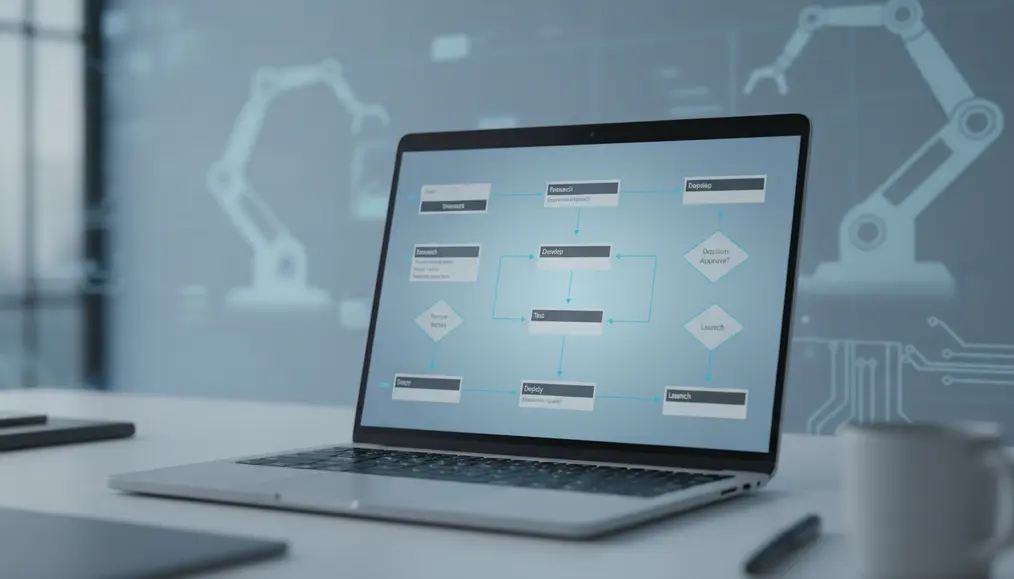
Mapping out processes is essentially creating a visual representation of the steps involved in completing a task or an entire workflow within your organization. It's not just drawing boxes and arrows; it's a deep dive into how work actually gets done. For businesses looking to `implement automation solutions`, this exercise is profoundly transformative. It moves beyond anecdotal understanding to provide an objective, visual guide of every input, decision point, and output. When you engage in business process mapping, you gain unparalleled visibility into your operations, making it much easier to pinpoint areas ripe for automation.
Without this crucial first step, any attempt to `streamline workflows` through technology risks simply digitizing existing flaws. You might end up with an automated mess instead of an optimized system. True `automation success` hinges on a clear, documented understanding of current processes, which allows you to identify what should be automated and how it can be improved before technology is even introduced. This foundational work is what distinguishes truly impactful `digital transformation` initiatives from those that fall short.
Why Process Mapping is the Foundation for Automation Readiness
The journey to `automation success` begins long before selecting software or coding algorithms. It starts with a comprehensive understanding of your existing operations. Here’s why mapping out processes is not just beneficial, but absolutely essential for achieving `automation readiness`:
Revealing Inefficiencies and Bottlenecks
Often, businesses operate with implicit processes—how things have "always been done." These undocumented workflows frequently harbor hidden inefficiencies, redundancies, and bottlenecks. When you undertake workflow analysis and visually map these processes, these issues become glaringly obvious. For instance, you might discover multiple approval steps where one would suffice, or data entry points that could be eliminated. Identifying these weak links is the first step toward true `process optimization` and preparing for an efficient automated system. Without this clarity, you risk automating a broken process, which will only amplify its flaws rather than fixing them.
Establishing a Baseline for Improvement
Before you can measure improvement, you need a starting point. Mapping out processes provides this baseline. By documenting your "as-is" processes, you create a quantifiable reference against which the "to-be" automated processes can be compared. This allows you to accurately measure the impact of automation on key metrics like cycle time, error rates, and resource utilization. This data-driven approach is vital for demonstrating the ROI of your automation projects and making informed decisions about future `digital transformation` efforts.
Ensuring Stakeholder Alignment and Communication
Automation projects often involve multiple departments and teams. Misunderstandings about roles, responsibilities, and process steps can derail even the most promising initiatives. Business process mapping provides a common visual language that everyone can understand, fostering better communication and alignment among stakeholders. When everyone sees the same map, they can contribute more effectively, identify potential issues, and collectively agree on the optimal path forward. This shared understanding is crucial for gaining buy-in and overcoming resistance to change, which is a `common pitfalls in process automation`.
Identifying Automation Opportunities with Precision
Not every step in every process is suitable for automation, nor should it be. Mapping out processes helps you strategically identify which tasks are repetitive, rule-based, high-volume, and thus ideal candidates for automation. Conversely, it helps you recognize steps that require human judgment, creativity, or empathy, which should remain manual or be augmented by automation rather than replaced. This precision in identifying opportunities ensures that your investments in `workflow automation` are targeted and yield maximum impact, contributing significantly to `achieving automation success with clear processes`.
The Step-by-Step Guide to Mapping Business Processes for Automation

Effective process mapping isn't a one-off event; it's a structured approach that requires careful planning and execution. Here are the key `steps to map business processes for automation`:
Step 1: Define the Scope and Objectives
Before you draw a single box, clearly define which process you're mapping and why. What specific problem are you trying to solve with automation? Are you aiming to `improve operational efficiency`, reduce costs, or enhance customer experience? Defining clear objectives will guide your mapping efforts and help you stay focused. For example, if your objective is to reduce customer service response times, you'll focus on the customer inquiry and resolution process.
Step 2: Identify and Gather Information from Stakeholders
Talk to the people who actually perform the work. Conduct interviews, observe tasks, and review existing documentation. This "ground truth" is invaluable. Ask detailed questions: "What triggers this process?", "What steps do you take?", "What tools do you use?", "What are the common challenges?". This helps in a thorough workflow analysis and understanding the nuances often missed in theoretical descriptions. Capturing these details is vital for accurately depicting the "as-is" process.
Step 3: Document the "As-Is" Process
This is where the visual mapping begins. Use flowcharts, swimlane diagrams, or Business Process Model and Notation (BPMN) to illustrate every step, decision point, role, and system involved in the current process. Ensure you document:
- Start and End Points
- Tasks/Activities
- Decision Points
- Responsible Roles/Departments
- Inputs and Outputs
- System Interactions
- Timelines and Volume Data (if available)
Step 4: Analyze the "As-Is" Process for Optimization Opportunities
Once documented, critically analyze the "as-is" map. Look for:
- Redundancies: Are tasks duplicated?
- Bottlenecks: Where do delays occur?
- Non-Value-Added Steps: Which steps don't contribute to the outcome?
- Manual Handoffs: Where is human intervention required that could be automated?
- Error Points: Where are mistakes most likely to happen?
Step 5: Design the "To-Be" Process (Optimized for Automation)
Based on your analysis, design the future state of the process—the "to-be" map. This version should eliminate identified inefficiencies and incorporate automation wherever feasible and beneficial. Consider:
- How will data be captured and transferred automatically?
- Which decisions can be automated using predefined rules?
- How can systems integrate to remove manual data entry?
- What will be the new roles and responsibilities post-automation?
Step 6: Validate and Gain Buy-In
Share your "to-be" process maps with all relevant stakeholders, especially those who will be directly impacted by the changes. Solicit their feedback and incorporate valid suggestions. This collaborative approach ensures that the proposed automated process is practical, meets operational needs, and garners essential buy-in, mitigating potential resistance to change—a key factor in `achieving automation success with clear processes`.
Step 7: Plan for Implementation and Monitoring
With a validated "to-be" map, you can create a detailed plan for `implement automation solutions`. This includes technology selection, system configuration, testing, training, and a rollout strategy. Post-implementation, it's vital to monitor the automated process, gather feedback, and continuously refine it. Process mapping is not a one-time activity but an ongoing cycle of improvement, especially as you continue to `digitalize operations`.
Common Pitfalls in Process Automation Without Proper Mapping

Skipping or rushing the mapping out processes phase can lead to significant problems, costing businesses time, money, and morale. Understanding these `common pitfalls in process automation` highlights the importance of thorough groundwork:
Automating a Broken Process
The most common mistake is to simply automate a process that is already inefficient or flawed. Automation magnifies whatever it touches. If you `automate business processes` that are broken, you'll end up with a faster, more expensive broken process. This negates any potential `efficiency gains` and can even exacerbate existing problems, leading to increased errors and user frustration. This is why a detailed workflow analysis is indispensable before any technical implementation.
Lack of User Adoption and Resistance
Without involving the people who execute the processes day-to-day, the new automated system might not meet their needs or could face significant resistance. When employees feel their input isn't valued or don't understand the benefits of the new process, adoption rates suffer. Proper business process mapping ensures stakeholders are involved from the outset, leading to greater acceptance and smoother transitions when you `implement automation solutions`.
Scope Creep and Unforeseen Complexity
Poorly defined processes often lead to scope creep in automation projects. Without clear boundaries established by mapping out processes, projects can expand uncontrollably, becoming more complex, costly, and time-consuming than initially anticipated. A well-defined process map acts as a clear blueprint, keeping the project focused and aligned with the original objectives, helping to `optimize business operations` without unnecessary detours.
Difficulty in Measuring ROI and Demonstrating Value
If you don't have a clear "as-is" process documented, it becomes nearly impossible to accurately measure the return on investment (ROI) of your automation efforts. How can you demonstrate `efficiency gains` or cost savings if you don't know the starting point? Process mapping provides the necessary baseline data to quantify improvements, justify investments, and build a strong case for further `digital transformation` initiatives.
Case Study: Leveraging Process Mapping for Supply Chain Automation Success
Consider a hypothetical manufacturing company, "Global Components Inc." They were struggling with an inefficient supply chain process, characterized by manual data entry, fragmented communication between departments, and frequent delays in order fulfillment. Their existing system involved multiple spreadsheets, email approvals, and a significant amount of human intervention for each order. This led to high operational costs and inconsistent delivery times.
Global Components Inc. partnered with Bornneo.Lab to address these challenges. The first step was a comprehensive mapping out processes exercise for their entire supply chain, from initial order placement to final delivery. Bornneo.Lab's team conducted extensive interviews with procurement, production, and logistics teams, meticulously documenting the "as-is" process using detailed swimlane diagrams. This `workflow analysis` immediately highlighted several critical bottlenecks:
- Manual reconciliation of purchase orders with inventory records.
- Lack of real-time visibility into supplier delivery schedules.
- A convoluted approval process requiring multiple departmental sign-offs for every deviation.
Armed with the "as-is" map, Bornneo.Lab collaborated with Global Components Inc. to design a "to-be" process optimized for automation. The new design focused on `digitalize operations` through:
- Automated purchase order generation based on predefined inventory levels.
- Integration of supplier portals for real-time tracking and updates.
- A streamlined, digital approval workflow with conditional logic to reduce manual intervention.
- Automated notifications for supply chain disruptions or delays.
- Reduced Order Cycle Time: From an average of 10 days to 3 days.
- Cost Savings: A 20% reduction in operational costs related to supply chain management due to fewer errors and reduced manual labor.
- Improved Supplier Relationships: Enhanced visibility and communication led to stronger partnerships.
- Enhanced `Automation Readiness`: The clarity provided by the process maps ensured the entire team understood the new system, fostering smoother adoption.
Tips for `Future-Proofing Operations` Through Continuous Process Mapping
The business landscape is constantly evolving, and so too should your processes. Mapping out processes should not be a one-time project but an ongoing commitment to `future-proofing operations` and sustaining `automation success`. Here are some tips:
- Regular Review Cycles: Schedule periodic reviews of your mapped processes, especially after major organizational changes or technology upgrades. This ensures your maps remain accurate and relevant.
- Cultivate a Culture of Process Improvement: Encourage employees at all levels to identify inefficiencies and suggest improvements. They are often on the front lines and have the best insights into how processes truly function.
- Leverage Technology for Mapping: Utilize dedicated Business Process Management (BPM) software or advanced diagramming tools that allow for version control, collaboration, and easy sharing of process maps. This helps `digitalize operations` of process management itself.
- Link Processes to Strategic Goals: Always connect your process improvement efforts back to overarching business objectives. This ensures that your process automation strategy is aligned with the company's vision and contributes to `digital transformation`.
- Document Deviations and Exceptions: Standard processes are important, but understanding how exceptions are handled is equally crucial. Documenting these deviations helps in designing robust automation solutions that can handle varied scenarios.
- Consider External Factors: Keep an eye on industry trends, regulatory changes, and technological advancements. These external factors can necessitate changes to your internal processes and offer new opportunities to `optimize business operations`.
By adopting these practices, your organization can move beyond reactive problem-solving to proactive `process optimization`, consistently identifying new ways to `streamline workflows` and maintain a competitive edge. This commitment to continuous improvement, spearheaded by thorough mapping out processes, is the hallmark of truly resilient and adaptable businesses.
Why choose Bornneo.Lab for Mapping out processes?
- 🌟 Client-focused delivery with clear scope, timelines, and measurable outcomes aligned to your business goals.
- 🧩 End-to-end support from discovery and strategy to implementation, documentation, and handover.
- 📌 Practical solutions built to fit your existing stack and team workflow—no unnecessary complexity.
Conversion-Driven Design
We design digital experiences with a clear purpose. Every layout, interaction, and call-to-action is strategically crafted to guide users toward meaningful conversions—whether that means leads, sign-ups, or business inquiries.
Mobile-First & Responsive
With the majority of users accessing websites from mobile devices, we prioritize responsiveness from day one. Our solutions adapt seamlessly across screen sizes while maintaining performance and usability.
SEO & Performance Optimized
We build with technical SEO, site speed, and performance best practices in mind—helping your website earn visibility, trust, and sustainable organic growth.
Bornneo.Lab Client Testimonials
★★★★★ – Sarah L.: "Bornneo.Lab transformed our internal operations. Their detailed approach to mapping out processes before recommending any automation saved us so much time and money. We now have clear, efficient workflows."
★★★★★ – David M.: "We thought we knew our processes, but Bornneo.Lab's workflow analysis opened our eyes. Their insights into where to apply `automation success` strategies were invaluable. Truly `future-proofing operations`."
★★★★★ – Emily R.: "The team at Bornneo.Lab made business process mapping an incredibly smooth experience. They helped us identify areas for `efficiency gains` we never considered, leading to a successful `digital transformation`."
★★★★★ – James P.: "Their expertise in process mapping was evident from day one. Bornneo.Lab helped us avoid `common pitfalls in process automation` by ensuring our foundation was solid. Our `automation readiness` improved dramatically."
★★★★★ – Olivia K.: "Working with Bornneo.Lab on `process optimization` was a game-changer. Their clear, practical solutions helped us `streamline workflows` and set the stage for sustainable `automation success`."
READ ALSO: Improving Efficiency: Why Your Business Needs Automation Now
Frequently Asked Questions About Process Mapping for Automation
What exactly does "mapping out processes" mean in the context of automation?
Mapping out processes refers to the visual documentation of all the steps, decisions, inputs, and outputs involved in a specific business operation. For automation, it means creating a detailed "as-is" diagram of how work is currently done and then designing an optimized "to-be" process that incorporates automated steps. This foundational business process mapping ensures that any technology implemented addresses real needs and delivers maximum `efficiency gains` rather than automating existing flaws. It's the critical first step in developing a robust process automation strategy.
Why is process mapping considered the first step towards automation success?
Mapping out processes is crucial because it provides clarity and insight into current operations before any automation begins. Without it, businesses risk automating inefficient or broken processes, leading to wasted resources and failed initiatives. It helps identify true bottlenecks, eliminate redundancies, and highlight the most impactful areas for `workflow automation`. This meticulous workflow analysis ensures `automation readiness` by establishing a clear, optimized blueprint for implementation, paving the way for `achieving automation success with clear processes`.
What are the benefits of undertaking a thorough workflow analysis before implementing automation?
A thorough workflow analysis through mapping out processes offers numerous benefits. It reveals hidden inefficiencies, identifies non-value-added steps, and uncovers bottlenecks that might not be apparent otherwise. This deep understanding allows for significant `process optimization` before automation, ensuring that only streamlined, effective processes are automated. It also fosters better communication among stakeholders, provides a baseline for measuring `efficiency gains`, and ultimately reduces the risk of project failure. This comprehensive approach is key to `future-proofing operations` and successful `digital transformation`.
Can process mapping help avoid `common pitfalls in process automation`?
Absolutely. By meticulously mapping out processes, businesses can proactively identify and mitigate `common pitfalls in process automation`. For instance, it prevents the automation of broken processes, ensuring that only optimized workflows are targeted. It also promotes stakeholder alignment, reducing resistance to change, and clarifies project scope, preventing scope creep. Furthermore, it provides the necessary data to accurately measure ROI, thus avoiding the pitfall of investing in automation without clear, quantifiable benefits. It's a strategic shield against costly mistakes when you `implement automation solutions`.
What tools or techniques are commonly used for `business process mapping`?
Several tools and techniques facilitate `business process mapping`. Flowcharts are a common and simple visual representation. Swimlane diagrams (also known as cross-functional flowcharts) are excellent for illustrating roles and responsibilities across different departments. For more complex and standardized mapping, Business Process Model and Notation (BPMN) is widely used, offering a rich set of symbols for detailed process representation. Software tools like Microsoft Visio, Lucidchart, Miro, or dedicated Business Process Management (BPM) suites provide platforms for creating, collaborating on, and managing these maps. The choice often depends on the complexity of the process and the level of detail required for `process automation strategy`.
How does process mapping contribute to `digital transformation` and `future-proofing operations`?
Mapping out processes is a foundational element of `digital transformation`. By providing a clear, holistic view of current operations and identifying areas for improvement, it lays the groundwork for strategic technological integration. It enables businesses to reimagine and redesign their workflows for a digital-first environment, moving beyond simply digitizing old ways of working. This forward-thinking approach, coupled with continuous `process optimization` and leveraging new technologies, helps in `future-proofing operations` by building adaptable, resilient systems that can evolve with market demands and technological advancements, ensuring sustainable `automation success`.
How often should a business revisit and update its process maps?
Process maps should not be static documents. To ensure they remain relevant for ongoing `process optimization` and `automation success`, businesses should revisit and update them regularly. This could be annually, semi-annually, or whenever significant changes occur within the organization, such as new software implementations, changes in leadership, regulatory shifts, or the introduction of new products/services. Continuous review and refinement of business process mapping ensure that your `digital transformation` efforts remain aligned with operational realities and strategic goals, consistently helping you to `optimize business operations`.
Contact Us
Ready to move forward with clarity and confidence? Get direct insights and tailored recommendations by speaking with our team.
Disclaimer: The information provided in this article is for general informational purposes only and does not constitute professional advice. While we strive to provide accurate and up-to-date content, business automation strategies and results can vary greatly depending on specific organizational contexts and market conditions. Readers are encouraged to consult with experienced business automation specialists for advice tailored to their unique needs and circumstances. Bornneo.Lab is not liable for any actions taken based on the information presented herein.