

In today's fast-paced business world, the role of an accountant is undergoing a significant transformation. Historically, accounting departments have been bogged down by repetitive, manual tasks like data entry, reconciliation, and report generation. This endless cycle of administrative work often leaves little room for the strategic analysis and valuable insights that businesses truly need to thrive. If your accounting team is still spending the majority of its time on these essential but time-consuming activities, you're likely missing out on opportunities to provide deeper value and drive business growth.
The good news is that there's a powerful solution at hand: automation for accountants. It’s no longer about simply digitizing paper trails; it's about fundamentally rethinking how financial operations are managed. By embracing advanced technologies, accountants can move beyond the traditional confines of bookkeeping and evolve into strategic partners, offering predictive insights and fostering greater financial agility. This shift isn't just about cutting costs; it's about empowering your team to contribute more meaningfully to your organisation's success.
At Bornneo.Lab, we understand the unique challenges faced by accounting firms and internal finance departments. We specialise in implementing tailored financial automation solutions that free up your team from the mundane, allowing them to focus on high-impact activities. Our approach helps you unlock efficiency, improve data integrity, and position your accounting function as a true strategic asset.
READ ALSO: Calculating ROI: The Financials of Business Automation
The Imperative for Automation in Accounting Today

The landscape of finance is evolving rapidly, driven by increased regulatory demands, higher expectations for real-time data, and the sheer volume of transactions. Sticking to outdated manual processes for basic functions like bookkeeping is no longer sustainable. Businesses require faster, more accurate financial reporting and deeper analytical insights to make informed decisions. This is where accounting automation software becomes indispensable.
The need for automation for accountants isn't just a trend; it's a strategic necessity. Companies that fail to adapt risk falling behind competitors who leverage technology to gain efficiency and accuracy. Manual errors can lead to compliance issues, financial misstatements, and lost revenue. Moreover, the opportunity cost of having skilled accountants focused on data entry instead of strategic planning is substantial. Embracing accounting technology means investing in your firm’s future, ensuring it remains competitive and relevant.
Moving Beyond Bookkeeping: A New Paradigm for Accountants

For too long, the perception of an accountant has been tied to the tedious work of bookkeeping. While essential, these tasks are prime candidates for workflow automation. By automating routine processes, accountants can significantly enhance their value proposition. The goal is to transform the accounting department from a cost center into a profit enabler and strategic partner. This pivot involves a shift in focus:
- From Transactional to Analytical: Instead of manually entering invoices, accountants can analyse trends in accounts payable and receivable.
- From Reactive to Proactive: Rather than merely reporting past performance, they can use automated data feeds for `predictive analytics`, forecasting future financial scenarios.
- From Compliance to Advisory: With robust `compliance` tools integrated, accountants can confidently advise on financial strategies rather than just ensuring regulatory adherence.
This transformation is at the heart of what `how automation helps accountants` achieve. It’s about leveraging technology to elevate the entire financial function. Automation allows for better `data accuracy` and consistency, which are foundational for any meaningful `strategic advisory` role.
Key Areas Where Automation Transforms Accounting
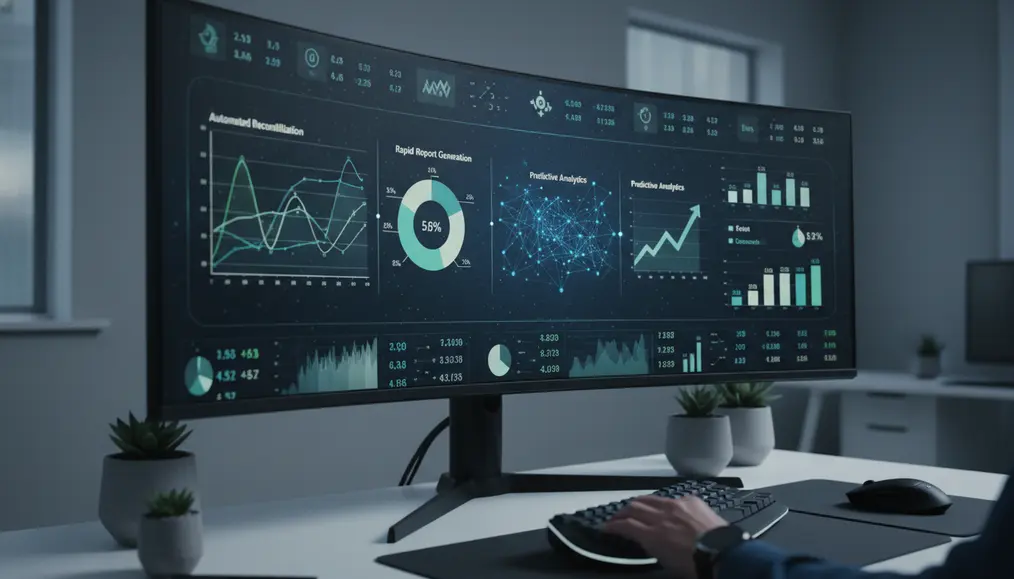
The scope of automation for accountants is broad, impacting almost every facet of financial operations. Here are some critical areas where `financial automation solutions` are making a profound difference:
Invoice and Expense Management Automation
Manual processing of invoices and expense reports is notoriously time-consuming and prone to errors. `Invoice processing automation` can handle everything from capturing data from various formats (scanned documents, emails) to matching them with purchase orders and initiating payments. Similarly, `expense management automation` streamlines the entire process, from receipt capture via mobile apps to automated approvals and reimbursements. This not only speeds up operations but also improves `audit trails` and reduces the potential for `fraud detection` issues.
Payroll and Tax Automation
Managing payroll involves complex calculations, compliance with changing tax laws, and timely disbursements. `Payroll automation` systems automatically calculate wages, deductions, taxes, and generate payslips, significantly reducing manual effort and ensuring `compliance`. `Tax automation` solutions, especially for businesses with multi-jurisdictional operations, can automatically prepare returns, calculate liabilities, and submit filings, minimising errors and potential penalties. These tools are crucial for `streamlining accounting processes` related to compliance.
Bank Reconciliation and General Ledger Automation
Reconciling bank statements with internal ledgers is a fundamental, yet often monotonous, task. Automated reconciliation tools can match transactions in seconds, flagging discrepancies for human review, thus drastically improving `data accuracy`. Furthermore, automated entries into the general ledger reduce manual input errors and provide `real-time reporting` capabilities, giving a continuously updated financial picture.
Financial Reporting and Analytics Automation
Generating monthly, quarterly, and annual financial reports can be a lengthy process. With automation, these reports can be generated at the push of a button, drawing directly from integrated data sources. This allows accountants to spend more time interpreting the data and offering `strategic advisory` rather than compiling it. Moreover, the integration of `business intelligence` tools with `accounting automation software` enables sophisticated analysis, leading to better `predictive analytics` and forecasting. This truly showcases the `benefits of automation for accounting firms`.
The Role of AI and RPA in Modern Accounting

The advancements in Artificial Intelligence (AI) and Robotic Process Automation (RPA) are further accelerating the `digital transformation` in accounting. `AI in accounting` is moving beyond simple rule-based automation to intelligent automation that can learn and adapt. For example, AI-powered tools can learn to categorise complex transactions, identify unusual patterns for `fraud detection`, and even assist in tax planning by analysing vast datasets. For a deeper dive into financial decisions, explore Calculating ROI: The Financials of Business Automation.
`RPA in finance` involves deploying software robots to mimic human actions in repetitive, rule-based digital tasks. This could be anything from opening emails and extracting data to populating forms and generating reports. Unlike traditional automation, RPA doesn't require complex system integrations; it works by interacting with existing applications just like a human user would. This makes it an ideal solution for `automate accounting tasks` across various legacy systems, providing immediate `improving efficiency with accounting automation`.
Benefits of Automation for Accountants and Businesses
The advantages of adopting `accounting automation solutions` extend far beyond mere cost savings:
- Increased Efficiency and Productivity: `Bookkeeping automation` and other `workflow automation` reduce manual hours, allowing teams to accomplish more with existing resources. This directly addresses `improving efficiency with accounting automation`.
- Enhanced Data Accuracy and Reliability: Automated systems minimise human error, leading to more reliable financial data and improved `data accuracy`. This is critical for internal decision-making and external reporting.
- Improved Compliance and Reduced Risk: Automated `compliance` checks and `audit trails` ensure adherence to regulations, reducing the risk of penalties and enhancing `fraud detection` capabilities.
- Faster Reporting and Real-Time Insights: `Real-time reporting` capabilities enable quicker access to financial data, facilitating timely and informed business decisions. This is one of the primary `accountant automation benefits`.
- Strategic Focus and Value-Added Services: By offloading routine tasks, accountants can shift their focus to `value-added services` such as financial analysis, forecasting, `predictive analytics`, and `strategic advisory`. This aligns with the `future of accounting automation`. For financial planners, automating processes can be a game-changer, as discussed in Automating Client Onboarding for AU Financial Planners.
- Better Employee Morale: Liberating accountants from mundane tasks improves job satisfaction and allows them to engage in more stimulating, higher-level work.
Implementing Automation in Accounting: A Step-by-Step Approach
Adopting automation for accountants requires a structured approach to ensure a smooth transition and maximise benefits. Here's a general framework:
1. Assess Current Processes and Identify Automation Opportunities
Begin by meticulously documenting existing accounting workflows. Pinpoint repetitive, rule-based tasks that consume significant time and are prone to human error. These are prime candidates for `accounting automation software`. Consider processes like `invoice processing automation`, `expense management automation`, `payroll automation`, and bank reconciliations. Understanding the current state is crucial before you `start accounting automation`.
2. Define Clear Objectives and KPIs
What do you aim to achieve with automation? Is it reducing processing time, improving `data accuracy`, enhancing `compliance`, or enabling more `value-added services`? Establish measurable Key Performance Indicators (KPIs) to track success. For instance, reducing invoice processing time by 50% or increasing the percentage of reconciled accounts by 20%. This clarity helps in choosing the right `accounting automation solutions`.
3. Research and Select Appropriate Automation Tools
The market offers a wide array of `accounting automation software`. Evaluate solutions based on your specific needs, budget, scalability, and integration capabilities with existing systems (e.g., ERP, CRM). Consider cloud-based platforms for flexibility and accessibility. Look into tools for `RPA in finance` or `AI in accounting` if your requirements are more advanced. Understanding `accounting software integration for automation` is key here. Bornneo.Lab can provide guidance on selecting the `best practices for financial process automation`.
4. Pilot Program and Phased Implementation
Start with a pilot program on a smaller scale to test the chosen solutions and gather feedback. This helps in identifying and resolving issues before a full-scale rollout. A phased `implementing automation in accounting` approach minimises disruption and allows your team to adapt gradually. This measured approach also helps address potential `challenges of accounting automation adoption`.
5. Train Your Team and Manage Change
Automation changes job roles, so comprehensive training is essential. Ensure your accounting team understands how to use the new `accounting technology` and, more importantly, how their roles will evolve to focus on `strategic advisory` and `business intelligence`. Effective change management is crucial to overcome resistance and foster adoption. This is how you `learn accounting automation` as an organisation.
6. Monitor, Evaluate, and Optimise
Automation is not a one-time project. Continuously monitor the performance of your automated processes against your defined KPIs. Gather feedback, identify areas for improvement, and explore further automation opportunities. The goal is continuous `streamlining accounting processes` and leveraging `digital transformation` for ongoing benefit. This ongoing optimisation is vital for the `future of accounting automation`.
Overcoming Challenges in Automation Adoption
While the `accountant automation benefits` are clear, `implementing automation in accounting` isn't without its hurdles. One of the main `challenges of accounting automation adoption` is often resistance to change from within the organisation. Employees might fear job displacement or the need to learn new skills. Addressing these concerns through transparent communication, clear training programs, and showcasing the `value-added services` they can now provide is paramount. Another challenge can be the initial investment cost and the complexity of `accounting software integration for automation`. However, with careful planning and the right partner, the long-term ROI usually far outweighs these initial obstacles. For instance, successful automation has been seen in managing complex data in Construction Project Automation: Managing Site Data.
Data security and `compliance` are also critical considerations. Any `financial automation solutions` must meet stringent security standards to protect sensitive financial information. Robust `audit trails` and secure data storage are non-negotiable features. Bornneo.Lab prioritises these aspects in all our implementations, ensuring your `digital transformation` is secure and compliant.
The Future of Accounting: A Strategic Partner Role
The `future of accounting automation` sees accountants increasingly shifting towards becoming strategic business partners. With `bookkeeping automation` and other routine tasks handled by machines, finance teams can dedicate their expertise to higher-value activities. This includes detailed `predictive analytics`, scenario planning, `strategic advisory` on investments, mergers, and acquisitions, and leveraging `business intelligence` for competitive advantage. The focus will be on interpreting complex data, identifying trends, and providing actionable insights that directly influence the bottom line. This evolution is vital for `accounting technology` to fully realise its potential.
For organisations looking to empower their accounting functions, understanding `how automation helps accountants` is the first step. It’s about creating an environment where `accounting automation solutions` drive efficiency, accuracy, and strategic foresight. Bornneo.Lab is at the forefront of this revolution, helping businesses leverage the full power of `automation for accountants` to achieve unprecedented levels of financial performance and insight. We work to ensure that `best practices for financial process automation` are consistently applied.
READ ALSO: Non-Profit Automation: Maximising Donor Impact
Frequently Asked Questions About Automation for Accountants
What exactly does automation mean for an accountant?
For an accountant, automation for accountants means leveraging technology like `accounting automation software`, `RPA in finance`, and `AI in accounting` to automate repetitive, rule-based tasks. This includes processes like `invoice processing automation`, `expense management automation`, `payroll automation`, `tax automation`, and bank reconciliations. The goal is to free up accountants from mundane `bookkeeping automation` so they can focus on `value-added services`, `strategic advisory`, `predictive analytics`, and `business intelligence`.
Will automation replace accountants?
No, automation for accountants is designed to augment, not replace, human roles. While some routine tasks will be automated, the demand for accountants who can interpret complex data, provide `strategic advisory`, ensure `compliance`, and apply critical thinking will increase. The `impact of AI on accounting jobs` is more about transforming roles, moving accountants towards more analytical and strategic functions, showcasing `how automation helps accountants` evolve.
What are the main benefits of implementing automation in accounting firms?
The `benefits of automation for accounting firms` are numerous, including `improving efficiency with accounting automation`, enhanced `data accuracy`, better `compliance`, `fraud detection`, `real-time reporting`, and the ability to offer more `value-added services`. It also leads to `streamlining accounting processes` and a significant `digital transformation` of the finance function, directly addressing `accountant automation benefits`.
What specific accounting tasks can be automated?
Many tasks can be automated, such as `invoice processing automation`, `expense management automation`, `payroll automation`, `tax automation`, bank reconciliations, data entry, report generation, and certain `audit trails` processes. `Workflow automation` can also streamline client onboarding and approval workflows. These are common areas where `accounting automation solutions` can `automate accounting tasks` effectively.
What are the challenges in adopting accounting automation?
Common `challenges of accounting automation adoption` include initial investment costs, `accounting software integration for automation` with existing systems, data security concerns, and resistance to change from employees. Selecting the right `accounting technology` and `implementing automation in accounting` requires careful planning and experienced guidance, which is where Bornneo.Lab excels, providing `best practices for financial process automation`.
How can Bornneo.Lab help my business with automation for accountants?
Bornneo.Lab specialises in designing and `implementing automation in accounting` that is tailored to your specific needs. We help you identify opportunities for `streamlining accounting processes`, select the most suitable `accounting automation software`, integrate systems, and provide ongoing support. Our expertise ensures a seamless `digital transformation`, allowing your team to `start accounting automation` confidently and enjoy `accountant automation benefits` while focusing on `strategic advisory` and `value-added services`. We guide you on `how automation helps accountants` achieve their full potential.
Why choose Bornneo.Lab for Automation for accountants?
- 🌟 Client-focused delivery with clear scope, timelines, and measurable outcomes aligned to your business goals.
- 🧩 End-to-end support from discovery and strategy to implementation, documentation, and handover.
- 📌 Practical solutions built to fit your existing stack and team workflow—no unnecessary complexity.
Conversion-Driven Design
We design digital experiences with a clear purpose. Every layout, interaction, and call-to-action is strategically crafted to guide users toward meaningful conversions—whether that means leads, sign-ups, or business inquiries.
Mobile-First & Responsive
With the majority of users accessing websites from mobile devices, we prioritize responsiveness from day one. Our solutions adapt seamlessly across screen sizes while maintaining performance and usability.
SEO & Performance Optimized
We build with technical SEO, site speed, and performance best practices in mind—helping your website earn visibility, trust, and sustainable organic growth.
Bornneo.Lab Client Testimonials
★★★★★ – David Chen: Bornneo.Lab truly transformed our finance department. Their automation for accountants solutions streamlined our `invoice processing automation` and significantly improved `data accuracy`. Our team can now focus on high-value analysis.
★★★★★ – Sarah Lim: We were struggling with manual `payroll automation` and `tax automation`. Bornneo.Lab implemented an incredible system that saved us countless hours and reduced errors. Their `financial automation solutions` are top-notch.
★★★★★ – Michael O'Connell: The `digital transformation` of our accounting functions, guided by Bornneo.Lab, has been remarkable. We now have `real-time reporting` and our accountants are providing `strategic advisory` like never before. This is the future of accounting.
★★★★★ – Emily R: Bornneo.Lab’s expertise in `accounting automation software` helped us navigate complex integrations. Their end-to-end support made `implementing automation in accounting` seamless, addressing all our `challenges of accounting automation adoption`.
★★★★★ – Alex Rodriguez: We chose Bornneo.Lab for `automation for accountants` to move beyond basic `bookkeeping automation`. The results speak for themselves: vastly `improving efficiency with accounting automation` and empowering our team to offer truly `value-added services`.
Contact Us
Ready to move forward with clarity and confidence? Get direct insights and tailored recommendations by speaking with our team.
Disclaimer: The information provided in this article is for general informational purposes only and does not constitute financial, legal, or professional advice. While we strive to provide accurate and up-to-date information, Bornneo.Lab makes no representations or warranties of any kind, express or implied, about the completeness, accuracy, reliability, suitability, or availability with respect to the website or the information, products, services, or related graphics contained on the website for any purpose. Any reliance you place on such information is therefore strictly at your own risk. We recommend consulting with a qualified expert for advice tailored to your specific situation.